Guide · Customs
An Tai Sui (安太岁): what the custom is, and whether you need it
Updated 22 November 2026
In short
An Tai Sui (安太岁) means “settling” the year’s Tai Sui, the deity of the ruling star of the year. Around Lunar New Year many people visit a Taoist or folk temple, register their name and birth details, and say a prayer for a steady year; some return at year end to give thanks. It is a custom, not a requirement. Nothing bad happens if you skip it, and what most people really seek from it, peace of mind and a fresh start, you can also build with good planning.
What does An Tai Sui mean?
安 means to settle or put at ease, and 太岁 (Tai Sui) is the deity of the year’s ruling star. In Taoist and Chinese folk belief, each year of the 60-year cycle has its own Tai Sui general who oversees human affairs for that year. For 2027, the 丁未 Fire Goat year, the general is traditionally named Miao Bing (缪丙). To 安太岁 is to pay respects to that year’s general at the start of the year and ask for a smooth, steady twelve months.
The custom is closely tied to the idea of meeting or offending Tai Sui (犯太岁): when your birth-year branch clashes with, punishes, harms or breaks the year’s branch, or is the same branch. People in those signs are the ones most often encouraged to go, though anyone may. Our guide to Tai Sui in 2027 explains which signs meet Tai Sui this year and what each relation means.
Where does the custom come from?
Tai Sui began as astronomy. Ancient Chinese astronomers tracked Jupiter, which takes about twelve years to circle the sky, and used it to count years. Because Jupiter moves through the twelve divisions of the sky in the opposite direction to the calendar’s count, they imagined a counter-planet, Tai Sui, moving the other way in step with the twelve earthly branches. That twelve-year cycle is the root of the twelve zodiac animals.
Over time the star became a deity. One of the earliest written mentions of beliefs about Tai Sui is in the Lunheng (论衡), written by the scholar Wang Chong in the first century AD. Taoism later gave each year of the 60-year 甲子 cycle its own general, so there are sixty Tai Sui in all. By the Ming dynasty, sacrifices to Tai Sui were part of the official state rites. The custom travelled with Chinese communities overseas, and many temples in Singapore and Malaysia today keep a Tai Sui hall or altar.
See where 2027 meets your chart
Before deciding anything, see where 2027 actually touches your chart: the free chart lists your four pillars and your Tai Sui relation, using the sun’s time for your birth city.
See my free chartHow is An Tai Sui done in Singapore and Malaysia?
Practice differs from temple to temple, but a visit usually follows a similar pattern. It most often happens in the first weeks of the lunar year, around Lunar New Year, which falls on 6 February in 2027.
- Registration. Many temples ask you to register in advance, at the counter or online, because the New Year period is busy.
- Your details. You give your name, often your Chinese name, and your date of birth, sometimes with the lunar date and the hour.
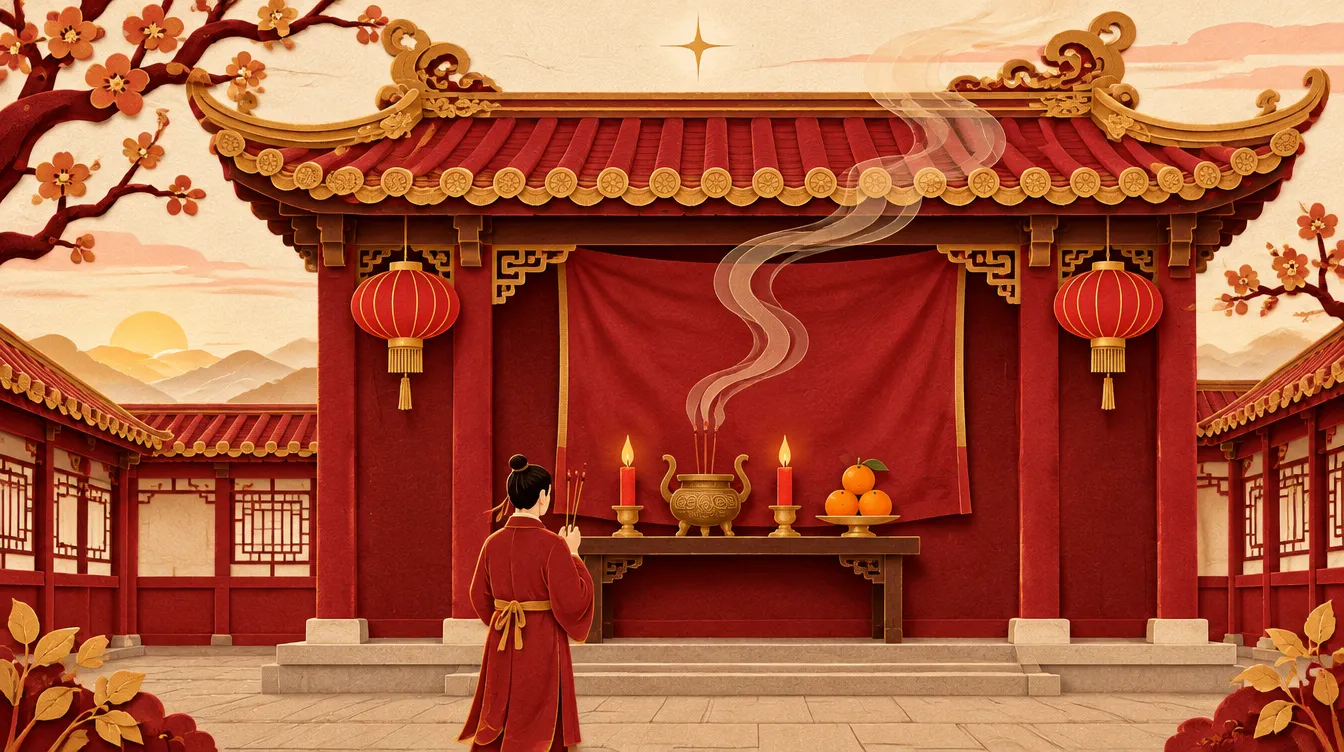
- Offerings and prayer. You light joss sticks and offer joss paper, and a temple helper or priest may recite a short prayer for you before the Tai Sui altar.
- A record for the year. Some temples place your name on a list, a paper tablet or a lamp near the Tai Sui altar for the year. What is offered, and any fee, varies by temple.
- Giving thanks. Some people return near the end of the lunar year to thank Tai Sui (谢太岁). Temples set their own timing, so ask when you register.
Parents often register their children, and some families register the whole household together. If you plan to go, check with the temple about registration dates, what they need from you and what it costs, and decide what you are comfortable with.
What do people actually seek from it?
Ask people why they go and the answers are rarely about fear. Most describe peace of mind: a sense that they have done something to mark the new year and can now get on with it. For others it is family tradition, something their parents and grandparents did, and going together keeps that link alive. Some value the quiet moment at the temple to think about the year ahead and set an intention for it.
Those are real and worthwhile things. A ritual can be a useful marker, much like a New Year resolution. It works best alongside practical steps, not in place of them.
Do you need to An Tai Sui?
No. An Tai Sui is a personal and cultural choice. Plenty of people meet Tai Sui and never visit a temple, and plenty go every year whatever their sign. Skipping it does not bring misfortune, and going does not change your BaZi chart. Your chart is fixed by the moment you were born; how a year treats you depends on the whole chart and on what you do.
Practical ways to start a Tai Sui year well
Whether or not you visit a temple, these steps give you the same steadiness people look for in the custom.
- Check your sign first. In BaZi the year changes at 立春, the start of spring (4 February in 2027), so if you were born in January or early February your sign may be the previous one.
- Pick your months. Each sign has better and more careful months in 2027. Put launches, signings and big purchases in the better ones.
- Build buffers. Keep some savings aside and leave room in your schedule, so changes feel manageable rather than stressful.
- Talk early. Many difficult years are made of small misunderstandings. Say what you mean and confirm agreements in writing.
- Set your own new-year intention. Write down two or three things you want from the year and review them each solar month.
If you would like a quiet moment of reflection without any purchase, you can draw a free Guanyin stick at our online temple, or look at your full chart to see where 2027 really meets you.
Questions
When do people usually An Tai Sui?
Most go in the first weeks of the lunar year, around Lunar New Year (6 February in 2027). Temples set their own dates and many need registration, so check with the temple first.
Do I have to An Tai Sui if my sign meets Tai Sui?
No. It is a personal choice. Skipping it does not bring bad luck, and many people who meet Tai Sui have good years through careful planning.
What is 谢太岁?
Thanking Tai Sui. Some people return to the same temple near the end of the lunar year to give thanks for the year. Timing varies by temple.
Can someone else register for me?
Many temples accept registrations made by family members, and parents often register their children. Customs differ, so ask the temple.
Does Qian Temple offer An Tai Sui?
No. We do not sell rituals, blessings or charms. We calculate charts and forecasts from classical rules so you can plan your year.
For reflection and entertainment.