Guides
Chinese astrology guides
In short
Plain-English guides to BaZi, Tai Sui, the 2027 Fire Goat year and Chinese temple traditions. Every fact comes from classical rules and the same engine as our charts, and nothing here is written to scare you.
2027: the Fire Goat year
 Tai Sui 2027: which signs meet the Fire Goat, and what it really meansWhich Chinese zodiac signs meet Tai Sui in 2027, the 丁未 Fire Goat year: Goat, Ox, Dog and Rat. What each relation means, which signs have a friendly year, and calm, practical ways to plan.
 Li Chun 2027: why the Chinese year starts on 4 February, not 1 JanuaryLi Chun (立春), the start of spring, falls at 09:46 Beijing time on 4 February 2027 and begins the 丁未 Goat year in BaZi. The 24 solar terms, the 12 节 month boundaries for 2027, why early-February births can belong to the previous sign, and the customs around the day.
 An Tai Sui (安太岁): what the custom is, and whether you need itWhat An Tai Sui (安太岁) means, where the custom comes from, how Singapore and Malaysia temples usually practise it, what people hope to gain from it, and calm planning steps you can take whether or not you go.
 Year of the Goat 2027: personality, lucky numbers and coloursThe Year of the Goat in 2027, the 丁未 Fire Goat year: the Goat’s traditional personality, its earthly branch 未, every Goat year since 1931, the Goat’s 2027 lucky colour, numbers and direction, and its most and least compatible signs.
 Ben ming nian 2027: a guide for anyone born in a Goat yearWhat 本命年 (ben ming nian) means, who has one in 2027 and at what age, the customs around it such as wearing red, and practical ways for Goats to plan the 丁未 Fire Goat year.
 2027 lucky colours for every Chinese zodiac signThe lucky colour, element, numbers and direction for all 12 Chinese zodiac signs in 2027, the 丁未 Fire Goat year, how they are worked out from the five elements, and simple ways to use them in your clothes and workspace.
 The best months of 2027 for each Chinese zodiac signThe best and most careful months of 2027 for all 12 Chinese zodiac signs, using Chinese solar months that start at the solar terms. How each month is scored, and how to time launches, signings and rest around them.
 Good dates to open a business in 2027 by the Chinese almanacHow 开市 opening dates are traditionally chosen: the almanac’s 宜 and 忌, the twelve day officers (建除), 黄道 days and the owner’s clash day. With a sample of 2027 dates worked out step by step, and the 2027 Hungry Ghost month dates.
 Wedding dates in 2027: how to choose one by the Chinese calendarHow couples choose a wedding date by the Chinese almanac: days marked 宜嫁娶, the day officers, 黄道 days and both partners’ clash days. With weekend 2027 dates worked out step by step, the 2027 Hungry Ghost month and what a year with no 立春 means.
 Moving house in 2027: choosing a good date and what to do on the dayHow to choose a moving-in date by the Chinese almanac (入宅 and 移徙), with 2027 weekend dates worked out step by step, the moving-day customs common in Singapore and Malaysia, and practical tips for the move.
 What the 丁 Fire of 2027 means for each Day MasterFor each of the ten BaZi Day Masters: which ten god the 2027 丁 Fire stem is, which ten god 未’s main hidden stem 己 is, what tradition says that emphasises in the year, and practical ways to use it.
 Having a baby in 2027: the Fire Goat year, and the old Goat-baby mythIs a 2027 baby a Goat? The exact 立春 dates that decide it, where the saying 十羊九不全 came from and why folklorists reject it, what birth data shows, the twelve month pillars of 2027, and calm advice on birth time and naming.
Zodiac signs
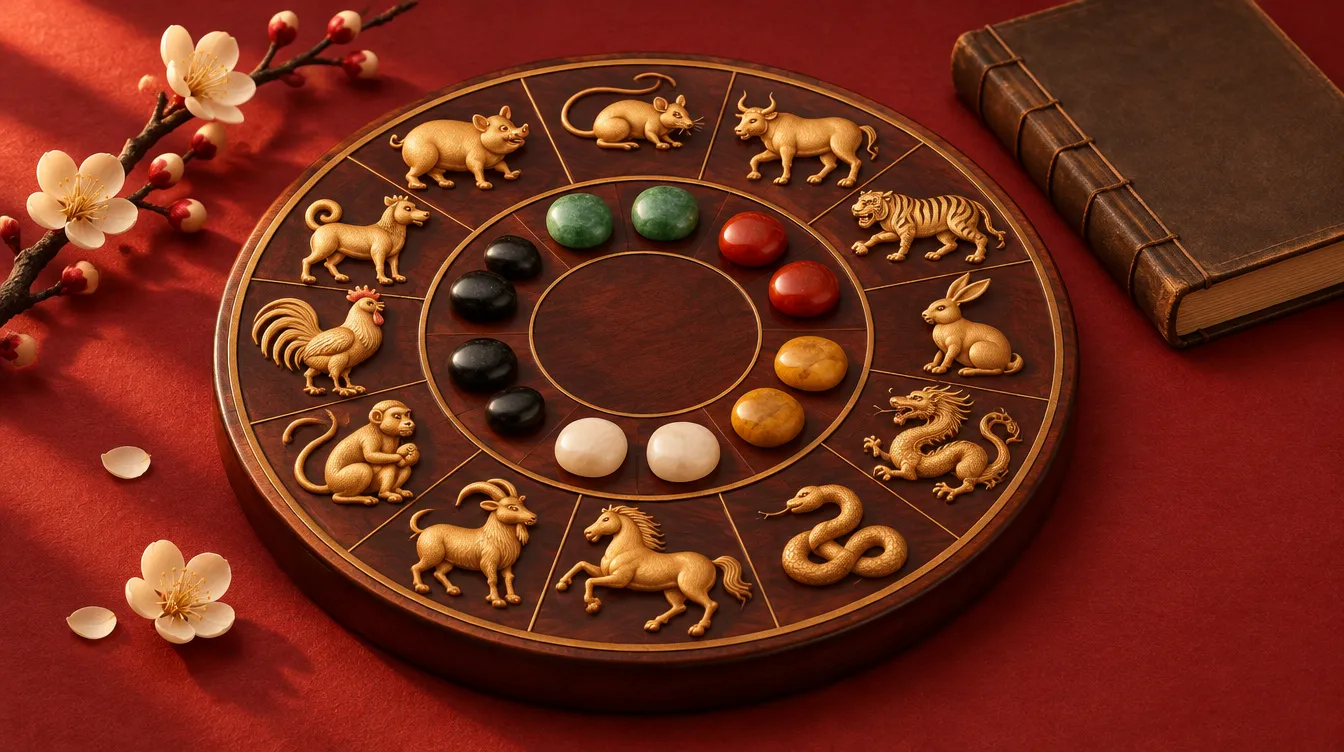 Chinese zodiac years chart: find your sign by birth year (1930–2027)Find your Chinese zodiac sign and element for every birth year from 1930 to 2027, with each year’s 立春 moment and Lunar New Year date. Why January and early-February births can belong to the previous sign, with worked examples.
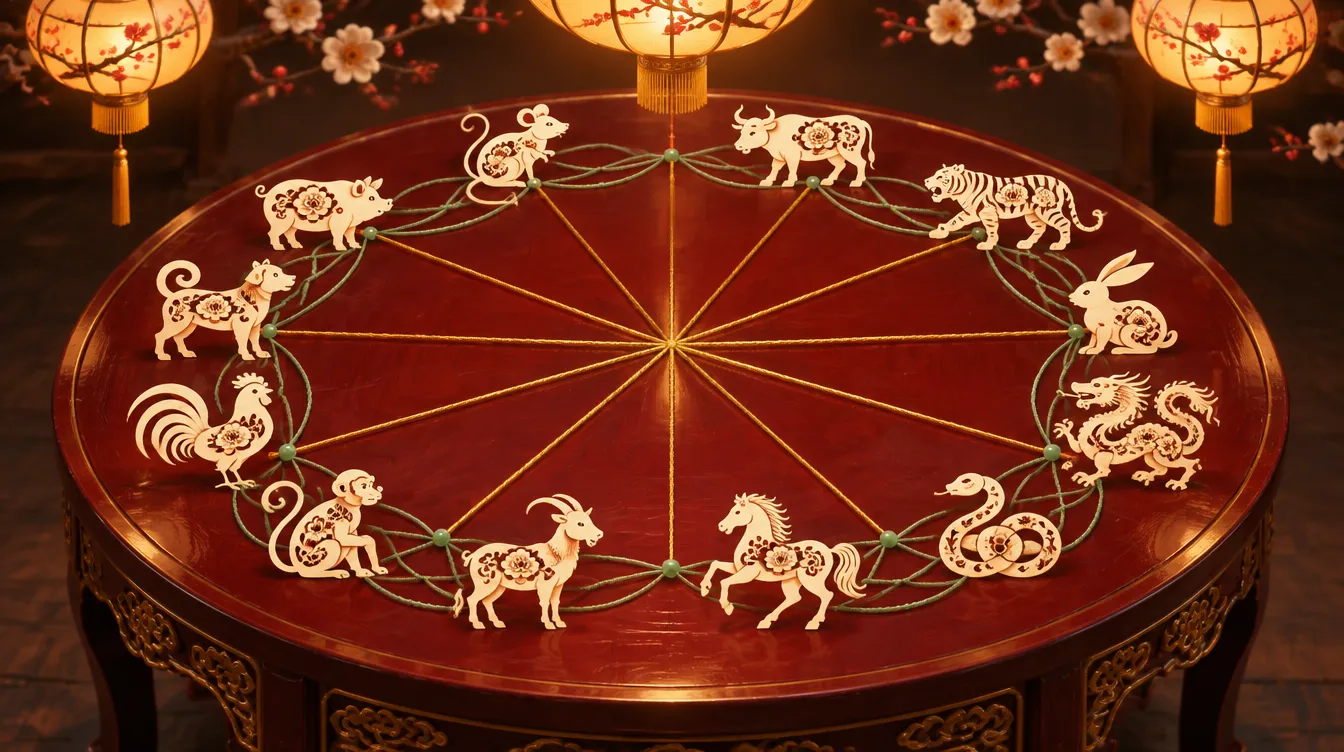 Chinese zodiac compatibility chart for all 12 signs, and why it’s only the startA Chinese zodiac compatibility chart for all 12 signs: each sign’s 六合 harmony and 三合 trine partners, the sign it clashes with (六冲) and the sign it harms (六害). What each relation means, and how a full BaZi match goes further.
 Clashing signs like Rat and Horse: are they really incompatible?The six clashing pairs of the Chinese zodiac (六冲): Rat–Horse, Ox–Goat, Tiger–Monkey, Rabbit–Rooster, Dragon–Dog and Snake–Pig. What a clash means in tradition, why clashing couples often match well, and practical ways to make it work.
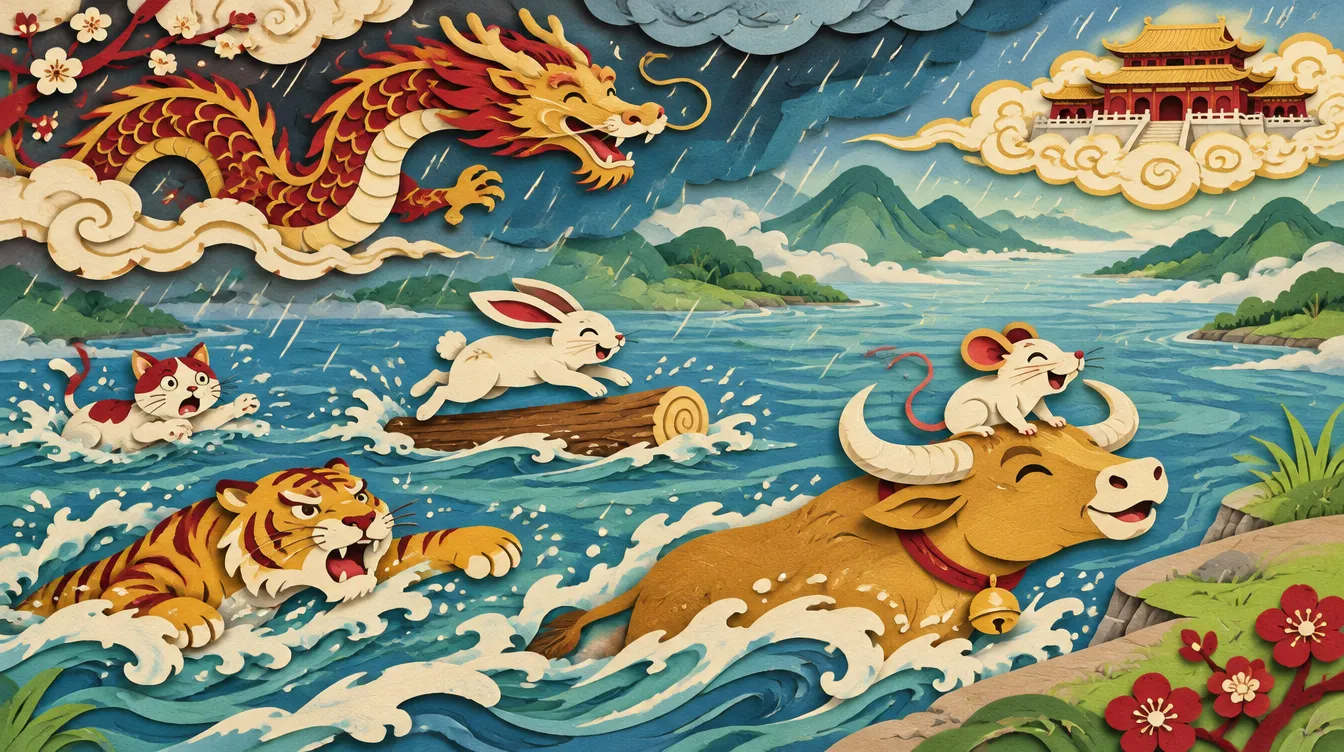 The Great Race: why the Chinese zodiac starts with the RatThe legend of the Great Race: the Jade Emperor’s river crossing, the Rat riding on the Ox, why there is no Cat, and how Vietnam ended up with one. Plus what history really records, from the Qin bamboo slips at Shuihudi, and how the order matches the earthly branches and the twelve double hours.
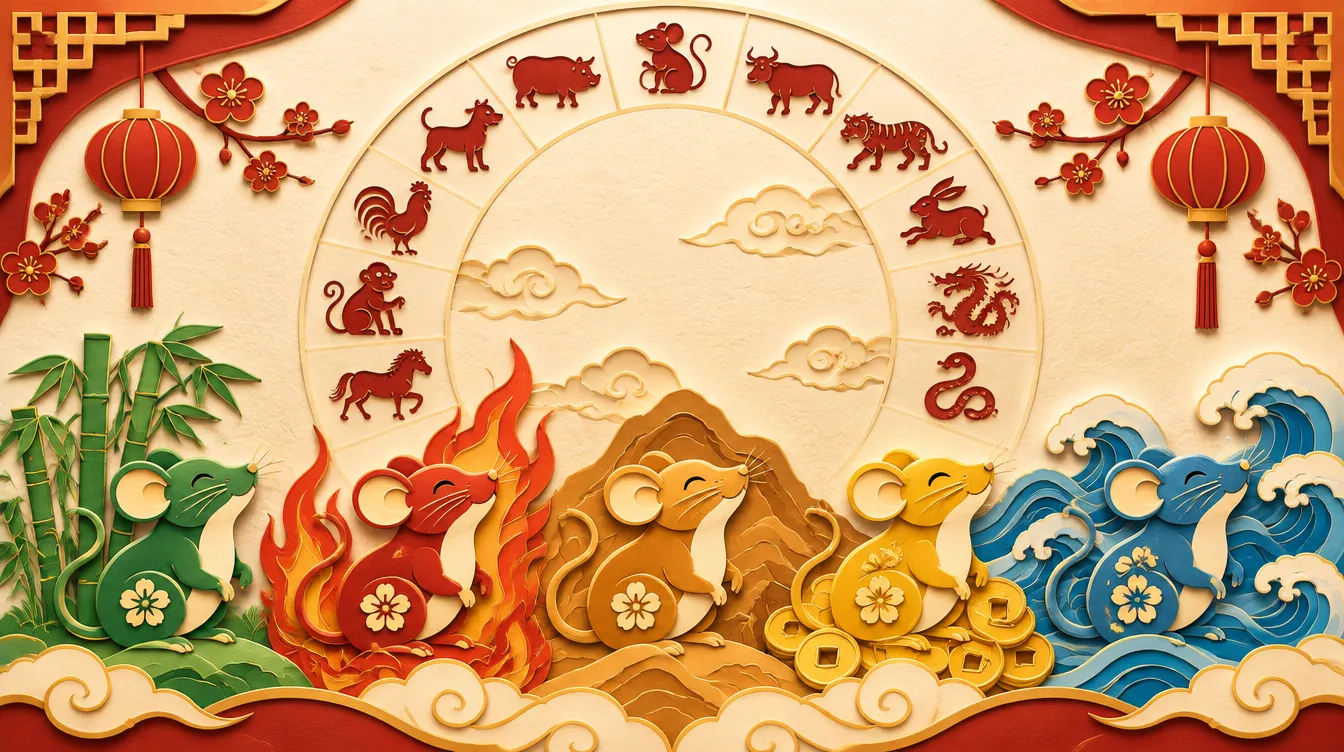 Metal Rat or Water Rat? Your zodiac animal’s element by birth yearWhy every zodiac animal comes in five elements: the year stem’s element (甲乙 Wood to 壬癸 Water) versus the animal’s own fixed element. A table of all 60 combinations from 1924 to 2043, why 纳音 can give a different answer, and how the 立春 boundary decides your element.
 The Rat in Chinese astrology: personality, years and best matchesThe Rat (鼠) in Chinese astrology: its branch 子, yang Water with one hidden stem, the hour and month it rules, traditional traits, the five element Rats by year, and every sign’s relation with the Rat.
 The Ox in Chinese astrology: personality, years and best matchesThe Ox (牛) in Chinese astrology: traditional traits, the branch 丑 and its three hidden stems, the Ox month before Chinese New Year 2027 with dates, the five element Oxen, best matches, and the Ox in art and story.
 The Tiger in Chinese astrology: personality, years and best matchesThe Tiger (虎) in Chinese astrology: why its branch 寅 opens the BaZi year, the Five Tigers rule for month pillars, traditional traits with a practical checklist, the five element Tigers, matches, and tigers in Chinese stories.
 The Rabbit in Chinese astrology: personality, years and best matchesThe Rabbit (兔) in Chinese astrology: traditional traits, the branch 卯 as pure Wood at the spring equinox, the Rabbit hour on a Singapore or Malaysian clock, the five element Rabbits, matches, and rabbits from the moon to idioms.
 The Dragon in Chinese astrology: personality, years and best matchesThe Dragon (辰) in Chinese astrology: its yang Earth branch and three hidden stems, the month, hour and direction it rules, traditional personality traits, the five element Dragons from 1952 to 2036, best matches and clash, and what Singapore’s birth figures say about dragon babies.
 The Snake in Chinese astrology: personality, years and best matchesThe Snake (巳) in Chinese astrology: early-summer Fire with hidden Metal, its month, hour and direction, how tradition describes Snake people, the five element Snakes, its matches and clash with a worked Snake and Monkey example, and the Snake in Chinese legend and in Penang.
 The Horse in Chinese astrology: personality, years and best matchesThe Horse (午) in Chinese astrology: midsummer Fire at the noon hour, its hidden stems, month and direction, the Horse’s traditional strengths and their flip side, the five element Horses and the Fire Horse year now ending, its matches, what happens when two Horses pair up, and Horse sayings with their sources.
 The Monkey in Chinese astrology: personality, years and best matchesThe Monkey (申) in Chinese astrology: early-autumn yang Metal that gives birth to Water, its hidden stems, month, hour and direction, the traditional Monkey character, the five element Monkeys and the coming 2028 Earth Monkey year, best matches and clash, Sun Wukong and Singapore’s Monkey God Temple, plus a practical checklist.
 The Rooster in Chinese astrology: personality, years and best matchesThe Rooster (酉) explained: yin metal, its hidden stem, month, hour and direction, the traditional Rooster personality, the five element Roosters by year, best matches and clash, and when the Rooster hour falls on Singapore and Malaysian clocks.
 The Dog in Chinese astrology: personality, years and best matchesThe Dog (戌) explained: yang earth that stores autumn fire, its hidden stems, month, hour and direction, the traditional Dog personality, the five element Dogs, best matches and frictions, and a table for January and February births.
 The Pig in Chinese astrology: personality, years and best matchesThe Pig (亥) explained: winter water holding the seed of spring wood, its month, hour and direction, the traditional Pig personality, the five element Pigs and the “golden pig” myth, best matches and the Tiger puzzle, and why the Pig hour can run past midnight on Malaysian clocks.
BaZi (Four Pillars)
 True solar time in BaZi: why your birth city changes your chartHow true solar time works in BaZi: longitude (4 minutes per degree), the equation of time, historical time zones and daylight saving, with worked examples for Shanghai, Hong Kong and Singapore.
 Singapore’s clock is an hour ahead of the sun: what that means for your BaZiSingapore’s clock runs about 65 minutes ahead of the sun, Kuala Lumpur’s about 73. The time-zone history since 1905, the 1982 change, who is affected and a worked example for your BaZi hour pillar.
 Born near midnight? How the 子 hour works in BaZiThe 子 (Rat) hour runs from 23:00 to 01:00 by the sun. Early and late 子 (早子 and 晚子), why schools differ on when the day changes, what our chart does, and how true solar time can move a birth across midnight.
 Don’t know your birth time? What BaZi can still tell youA BaZi chart without a birth time still gives you six of eight characters and your Day Master. What the hour pillar adds, why Zi Wei Dou Shu needs the hour, how to find your birth time in Singapore and Malaysia, and what our chart does.
 BaZi marriage compatibility (合婚): how it works beyond your animal signHow BaZi marriage compatibility (合婚) works: Day Master elements, the five stem combinations, the spouse palace, 纳音, shared favourable elements and timing. Where schools differ, what our free check and Couple reading look at, and the honest limits.
 The spouse palace: what your day branch says about relationshipsThe spouse palace (夫妻宫) is the branch of your day pillar. What it means, the hidden stems inside it, how it meets your partner’s day branch, how 2027’s 未 meets each day branch, and what it can and cannot tell you.
 How to read your BaZi chart: a beginner’s guide to the Four PillarsA beginner’s walk through a real BaZi chart, pillar by pillar: heavenly stems and earthly branches, the Day Master, the five elements, hidden stems, what each pillar traditionally stands for, and where to find each part on a free chart.
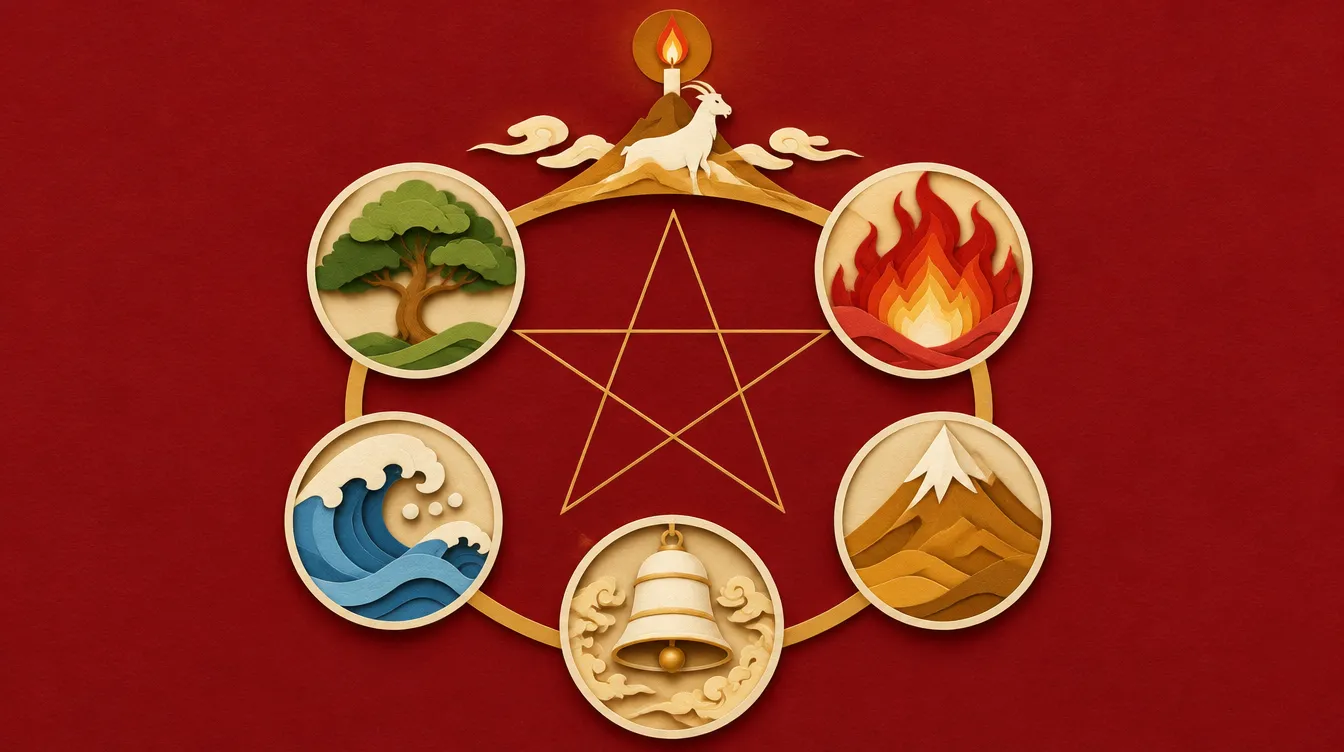 The five elements in BaZi: how Wood, Fire, Earth, Metal and Water interactHow the five elements work in BaZi: the producing and controlling cycles, which stems and branches belong to each element, why your birth season matters, the difference between balance and strength, and what the 2027 丁未 year adds.
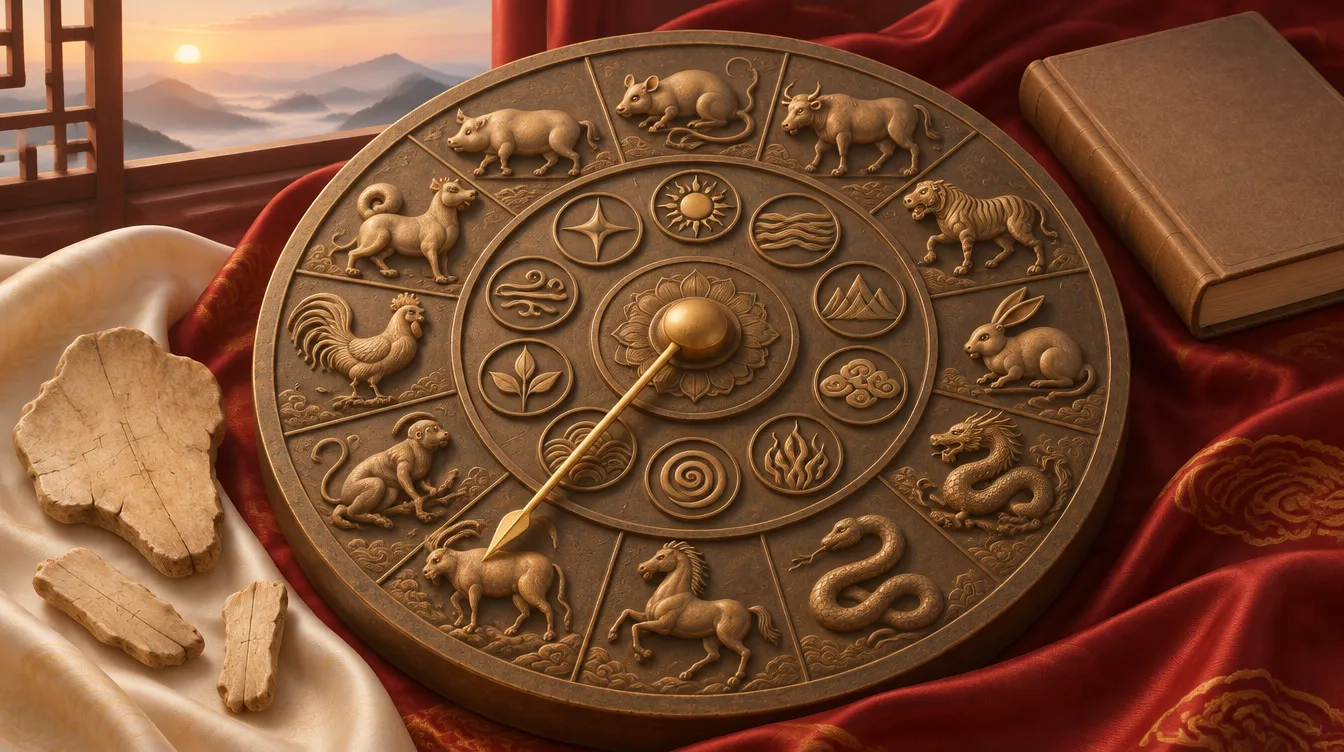 Heavenly stems and earthly branches: the 60-year cycle explainedThe ten heavenly stems and twelve earthly branches with their elements, polarity, animals, months, hours and directions; how they pair into the 60-year cycle; why 2027 is 丁未, number 44; and how they mark years, months, days and hours.
 The ten gods (十神) explained in plain EnglishWhat the ten gods (十神) of BaZi are, how each one is worked out from your Day Master, the five groups they form, what tradition says they stand for, and how to read them without fatalism.
 Strong or weak Day Master: how to tell and why it mattersHow BaZi judges a strong or weak Day Master: the birth season (月令), roots in the branches and support from the stems. The main schools, exactly how our engine scores strength, a worked example, and why strong does not mean good.
 Favourable elements (喜用神): how to find yoursWhat 用神, 喜神 and 忌神 mean, how the balance and climate (调候) methods find them, exactly how our chart picks your favourable elements, and everyday ways to use them: colours, directions, numbers and timing.
 Missing an element in your BaZi chart? What it means, and what it doesn’tWhy so many BaZi charts “lack” an element, the difference between counting the eight visible characters and counting hidden stems, how luck pillars and years supply what a chart lacks, and what the Missing line on our free chart means.
 Luck pillars (大运): how your 10-year cycles workHow BaZi luck pillars (大运) are worked out: forward or backward by year stem and gender, the start age from the days to the nearest 节 solar term (3 days = 1 year), what a luck pillar does, how to read a change of pillar, and what our 10-year luck pillars reading covers.
 Symbolic stars in BaZi: Nobleman, Peach Blossom and Travelling HorseThe ten symbolic stars (神煞) our BaZi chart computes, from the Nobleman (天乙贵人) to the Travelling Horse (驿马): how each is looked up, the classical source 三命通會, a worked example, and why stars colour a reading rather than decide it.
 The Peach Blossom star: what it says about love in your chartHow to find the Peach Blossom star (桃花) in a BaZi chart from your year and day branches, what it traditionally means for charm, social life and romance, which months of 2027 carry it, and a healthy way to read it.
 BaZi and career: which kinds of work suit your elementsHow BaZi links the five elements to fields of work, what the ten-god groups (output, wealth, officer, resource, companion) say about your working style, how 2027 meets each Day Master, and how to use it all to play to your strengths.
 Wealth in BaZi: how to read the money elements in your chartIn BaZi your wealth element is the element your Day Master controls. A table for all ten Day Masters, direct and indirect wealth, why the strength of your chart matters, what 2027 brings for money by Day Master, and everyday money habits that fit your chart.
 Naming a baby by BaZi: how Chinese parents choose the charactersHow Chinese families choose a baby’s name from the BaZi chart: favourable elements, meaning, sound and tones, generation names (字辈), avoiding elders’ names and awkward homophones, and where stroke counts fit. Plus when to name, and exactly how our Chinese name service picks and checks names.
 Hidden stems (藏干): what sits inside each earthly branchThe hidden stems (藏干) of all twelve earthly branches with the main, middle and residual qi, the weights our engine gives them, why branches hold one, two or three stems, how roots (通根) work, and a worked example.
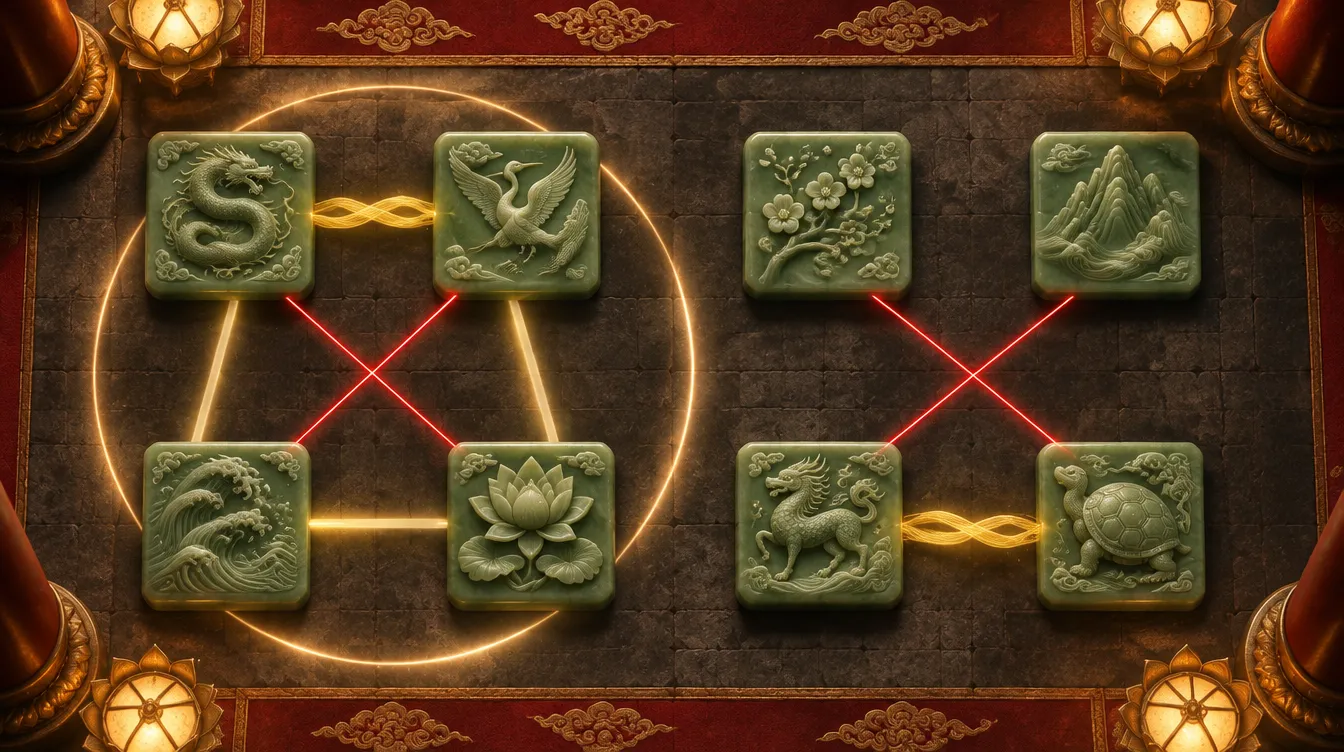 Clashes, combinations and punishments in a BaZi chart (刑冲合害)Every relation that can form inside one BaZi chart: stem combinations and clashes, six harmonies, trines, seasonal sets, clashes, punishments including self-punishment, harms and breaks. Full tables, how schools rank them, and a worked example.
 The twelve life stages (十二长生): from birth to restThe twelve life stages (十二长生) of BaZi, from 长生 to 养: what each name means, the yang-forward, yin-backward convention our engine uses, where each Day Master stands on every branch, where 2027’s 未 falls for you, and how to read the stages gently.
 Na Yin (纳音): the 60 sounds and what your year’s sound meansThe full Na Yin (纳音) table for all sixty stem-and-branch pairs, with English meanings and birth years from 1924 to 2043. Where the sounds come from, how their order works, how our compatibility check uses them, and why 2027 is 天河水, Heavenly River Water.
 BaZi structures (格局): the shape of a chartWhat a BaZi structure (格局) is, the eight regular structures named from the month branch plus 建禄格 and 月刃格, exactly how our engine picks yours, six worked examples, and the special structures such as 从格 that our engine does not assess.
 Void branches (空亡): what “empty” means in a chartWhat 空亡 (void, or emptiness) is in BaZi, how the two void branches come from the ten-day week (旬) of your day pillar, a table of all six 旬, how tradition reads a void gently, a worked example, and the day pillars whose void branch arrives in 2027.
 Reading your own year (流年): how a year meets your chartA step-by-step method for reading the annual pillar (流年) against your own BaZi chart: the year stem and branch as ten gods, branch and stem relations with each pillar, the luck pillar behind it, the months inside it, and a full 2027 worked example from our engine.
Zi Wei Dou Shu and the I Ching
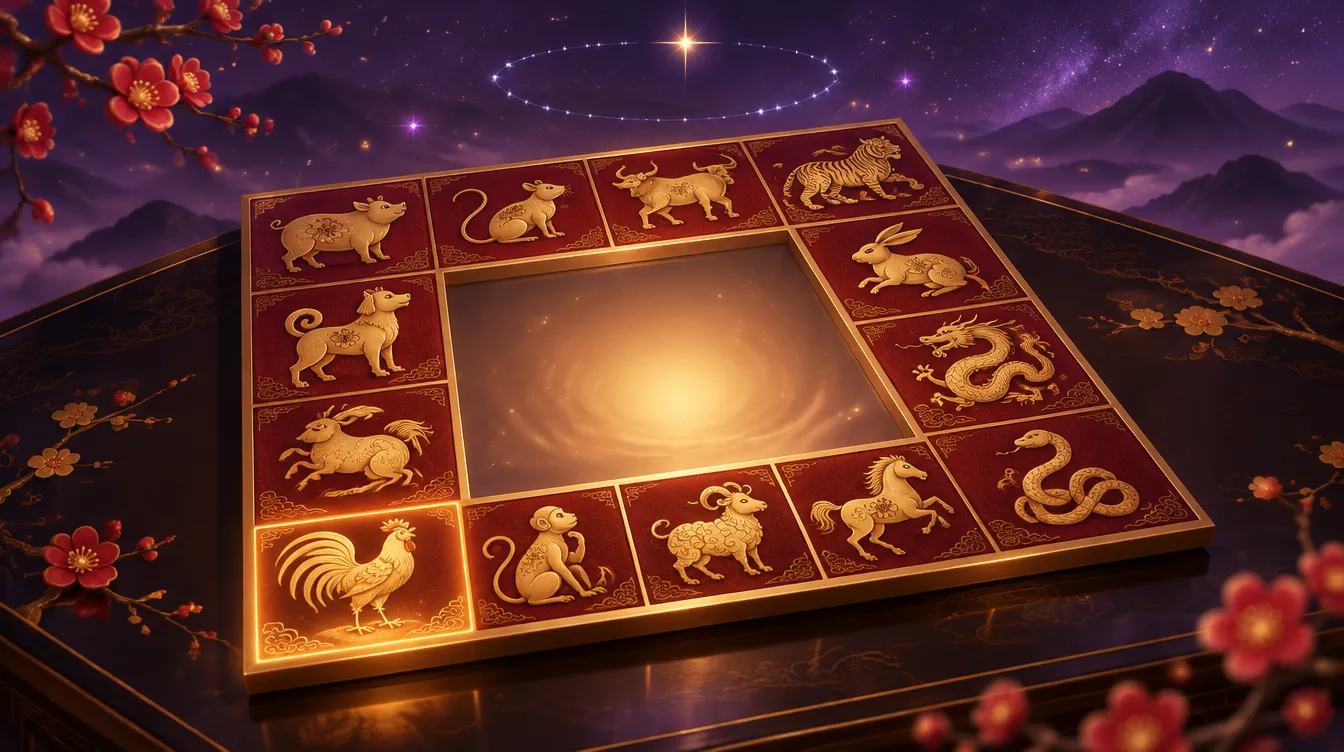 Zi Wei Dou Shu for beginners: the 12 palaces explainedThe 12 palaces of Zi Wei Dou Shu (紫微斗数) in plain English: what each palace covers, how your birth month and hour place the Life palace, what the Body palace is, and how to read a chart step by step.
 The 14 major stars of Zi Wei Dou Shu and what they meanThe 14 major stars of Zi Wei Dou Shu (紫微斗数): the 紫微 and 天府 star groups, what each star traditionally means, the seven brightness levels from 庙 to 陷, the four transformations (四化) and the 2027 丁 year’s transformations.
 Zi Wei Dou Shu or BaZi: which one should you use?Zi Wei Dou Shu (紫微斗数) and BaZi (八字) compared: what each needs, how each works, which questions each answers well, why birth time matters more for Zi Wei, and how to use the two together.
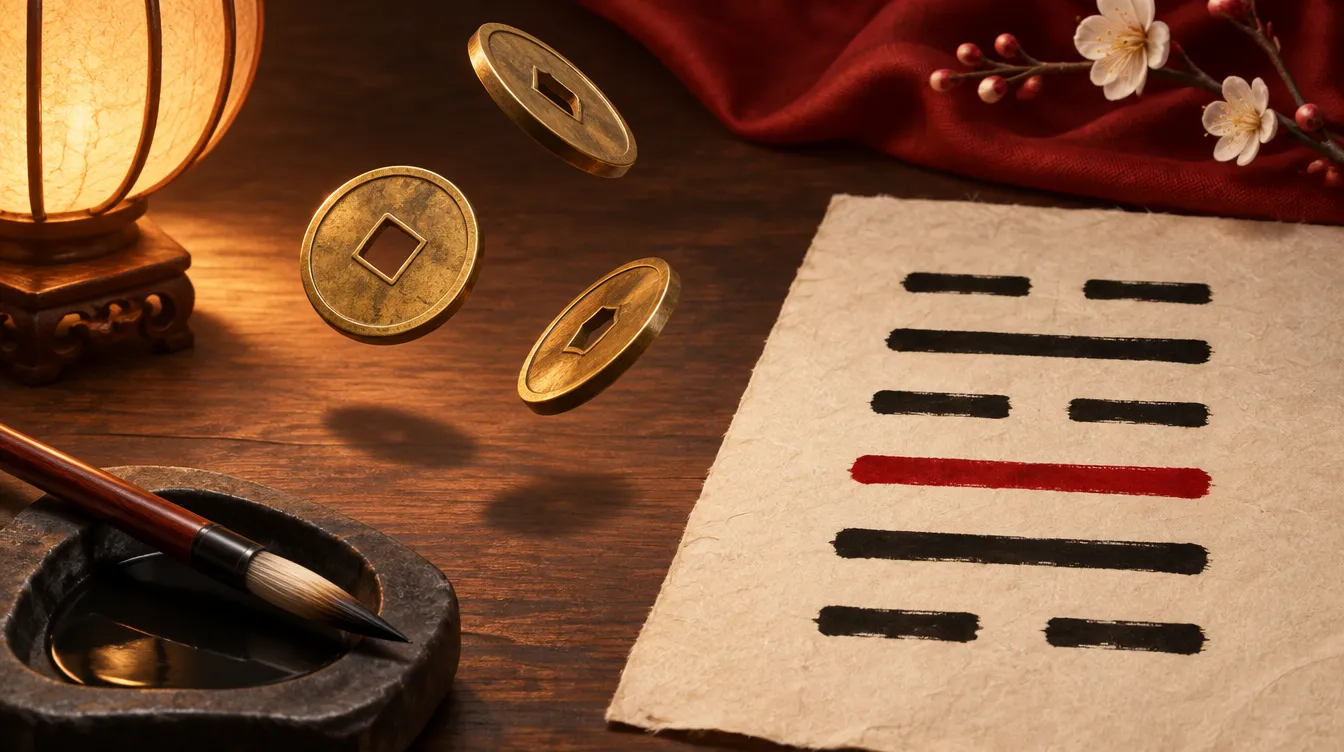 How to ask the I Ching a question, and how to read changing linesA plain guide to consulting the I Ching (易经): how to frame a good question, the three-coin method step by step, how to read the judgment, image and changing lines, what the relating hexagram (之卦) shows, and the most common mistakes.
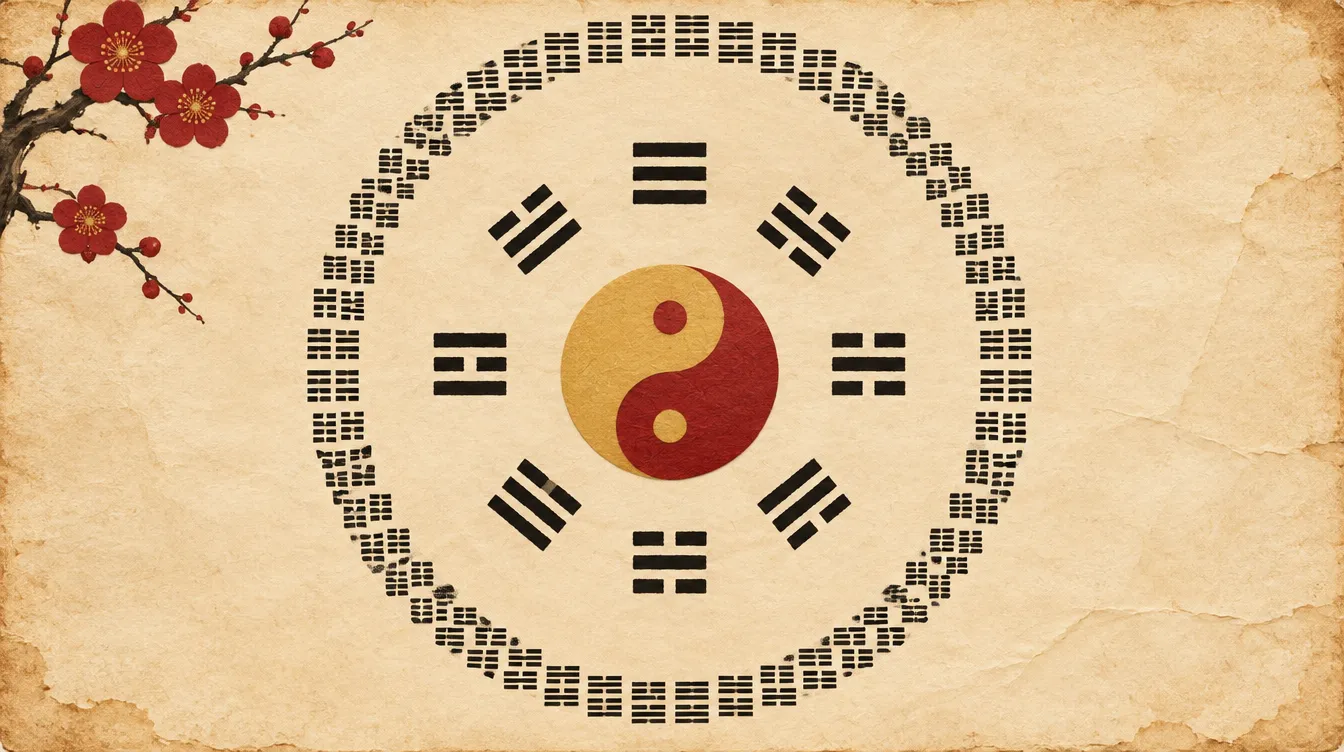 The 64 hexagrams of the I Ching: a plain-English guideAll 64 hexagrams of the I Ching (易经) in one table, with their Chinese names, English names and a one-line gist. Plus the eight trigrams, how two trigrams make a hexagram, and how the King Wen order pairs them.
Fortune sticks and temples
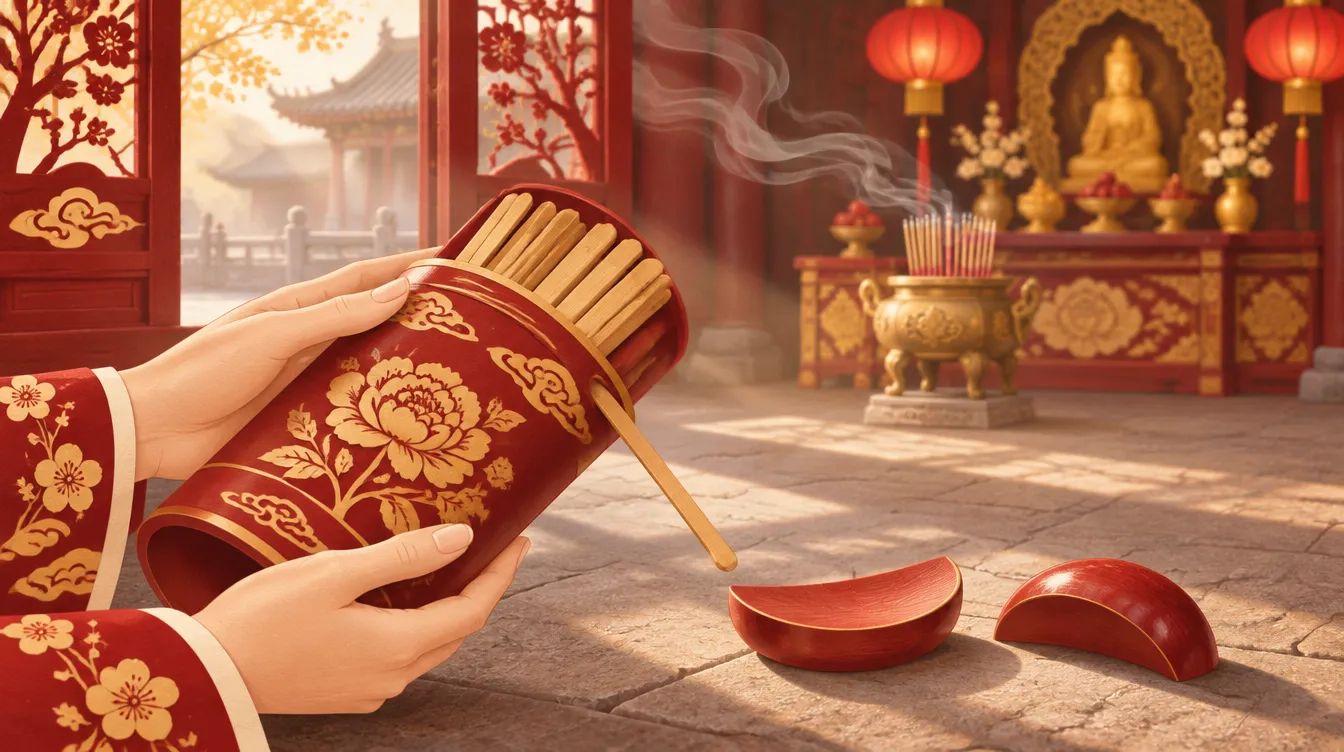 How to do kau cim (求签): a step-by-step guide to Guanyin fortune sticksHow to do kau cim (求签) at a temple or online: preparing your question, shaking the cylinder, confirming the stick with moon blocks (筊杯), getting the slip and its interpretation, and simple etiquette.
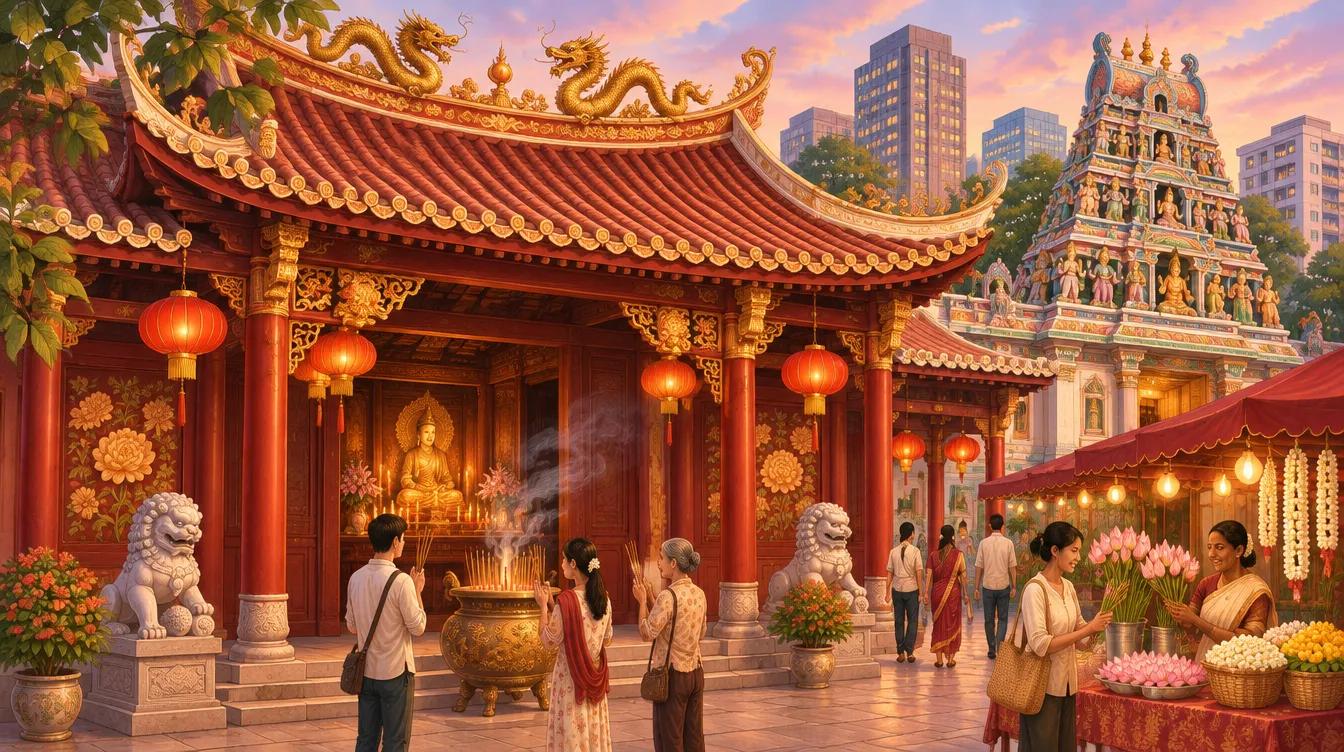 Where to do kau cim in Singapore, and what to bringWhere to do kau cim (求签) in Singapore, starting with Kwan Im Thong Hood Cho Temple on Waterloo Street in Bugis. What to bring, temple etiquette, busy days around Lunar New Year, and getting your stick interpreted.
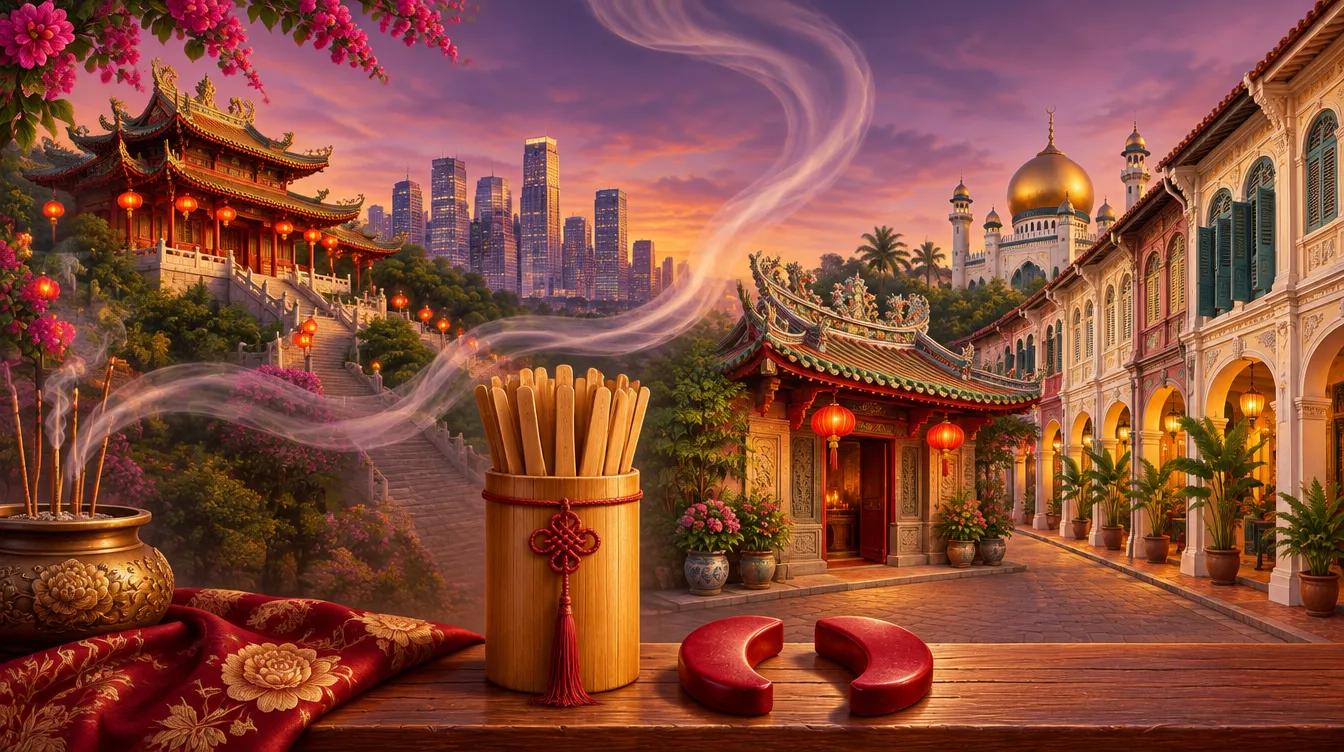 Kau cim in Kuala Lumpur and Penang: temples and customsWhere to do kau cim (求签) in Kuala Lumpur and Penang: Thean Hou Temple and Sin Sze Si Ya Temple in KL, and the Goddess of Mercy Temple (Kuan Yin Teng) in George Town. Local customs, busy days and Cantonese and Hokkien words to know.
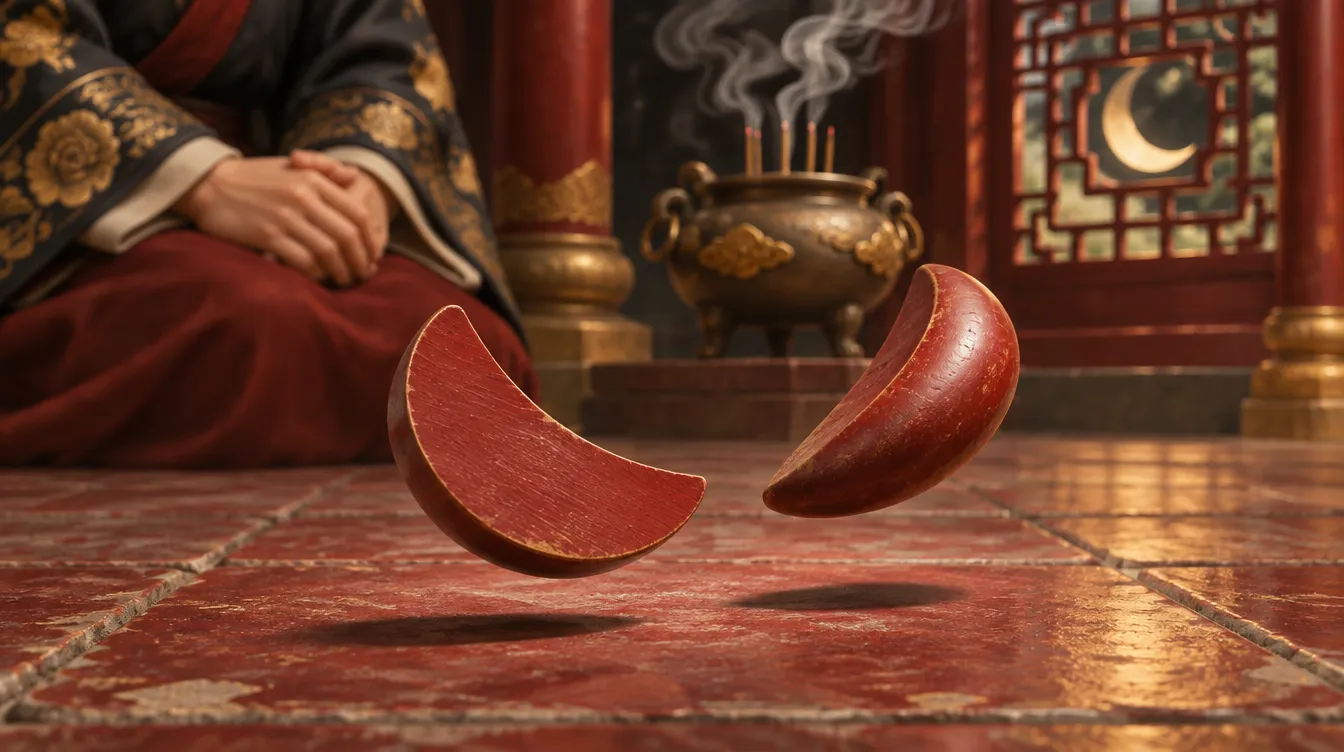 Moon blocks (筊杯) explained: how temples confirm your fortune stickWhat moon blocks (筊杯, jiaobei) are, the three outcomes (圣杯 yes, 笑杯 laughing, 阴杯 no), how many throws temples ask for, their names in Hokkien and Cantonese, and how our online temple uses them.
 Drew a 下 stick? How to read a difficult fortune calmlyWhat a 下 (lower) fortune stick means, why it is advice for a season, how to read its verse for your own question, and what people traditionally do after drawing one. With examples from the 100 Guanyin sticks.
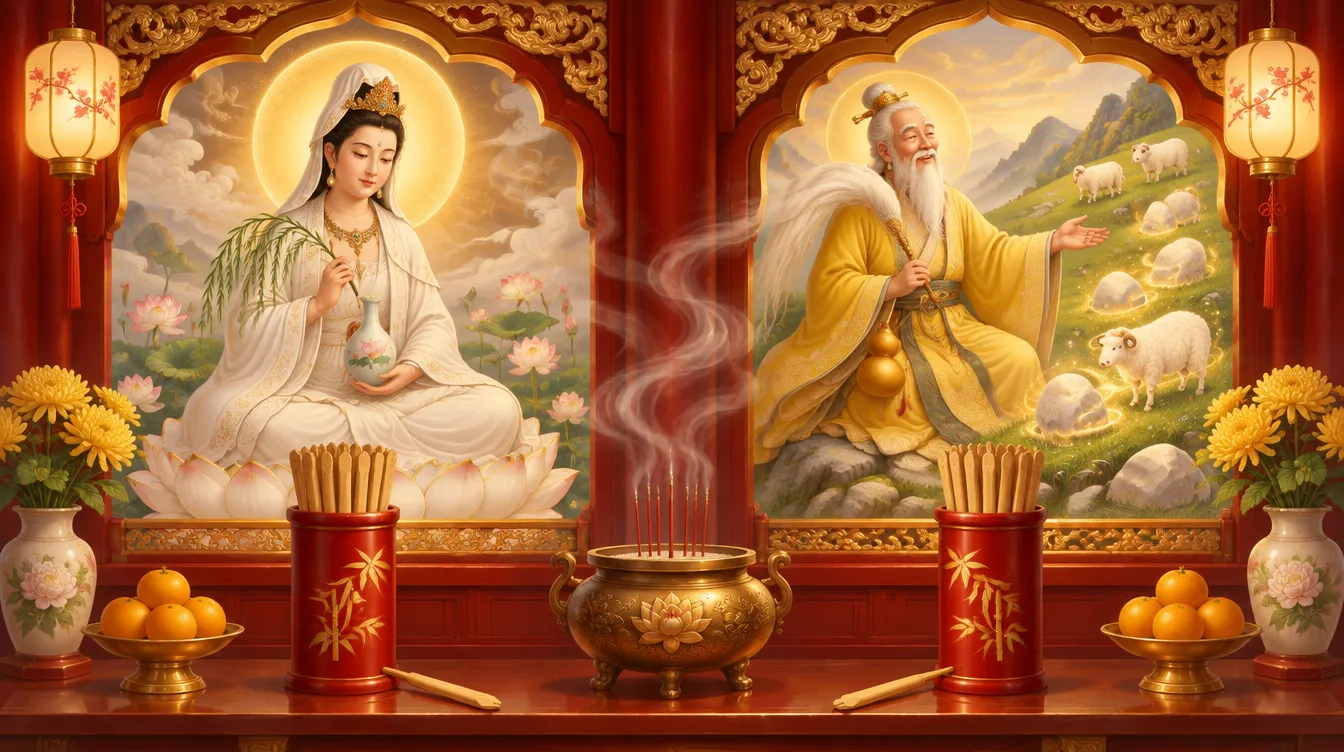 Guanyin sticks and Wong Tai Sin sticks: what’s the difference?Guanyin (观音) and Wong Tai Sin (黄大仙) both answer questions through 100 fortune sticks, but the verses and ranks differ. Who each one is, the Wong Tai Sin Temple in Hong Kong, how the two sets compare, and why a stick number only works with its own set.
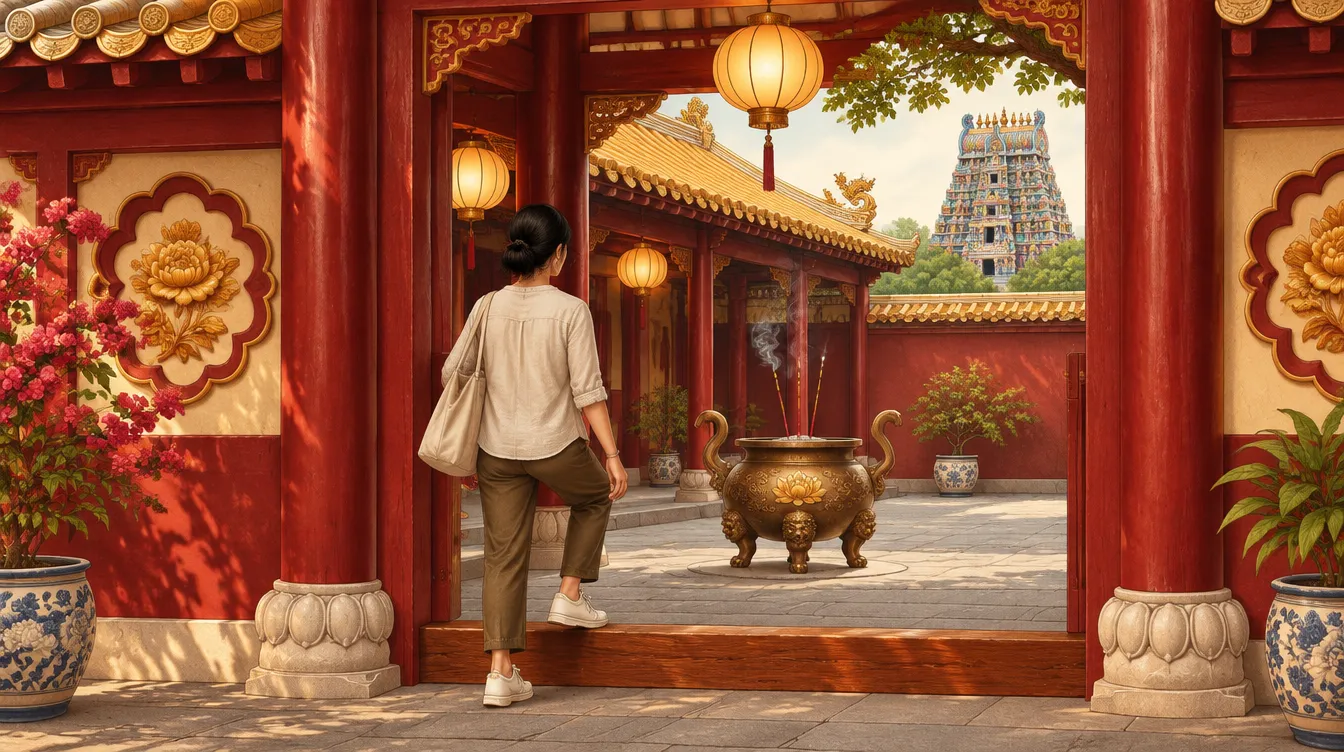 Chinese temple etiquette: a guide for first-time visitorsHow to visit a Chinese temple respectfully: which door to use and why you step over the threshold, what to wear, how many incense sticks and in what order, photos, donations, kau cim, and the multi-faith streets of Singapore and Penang. With a printable checklist.
Feng shui
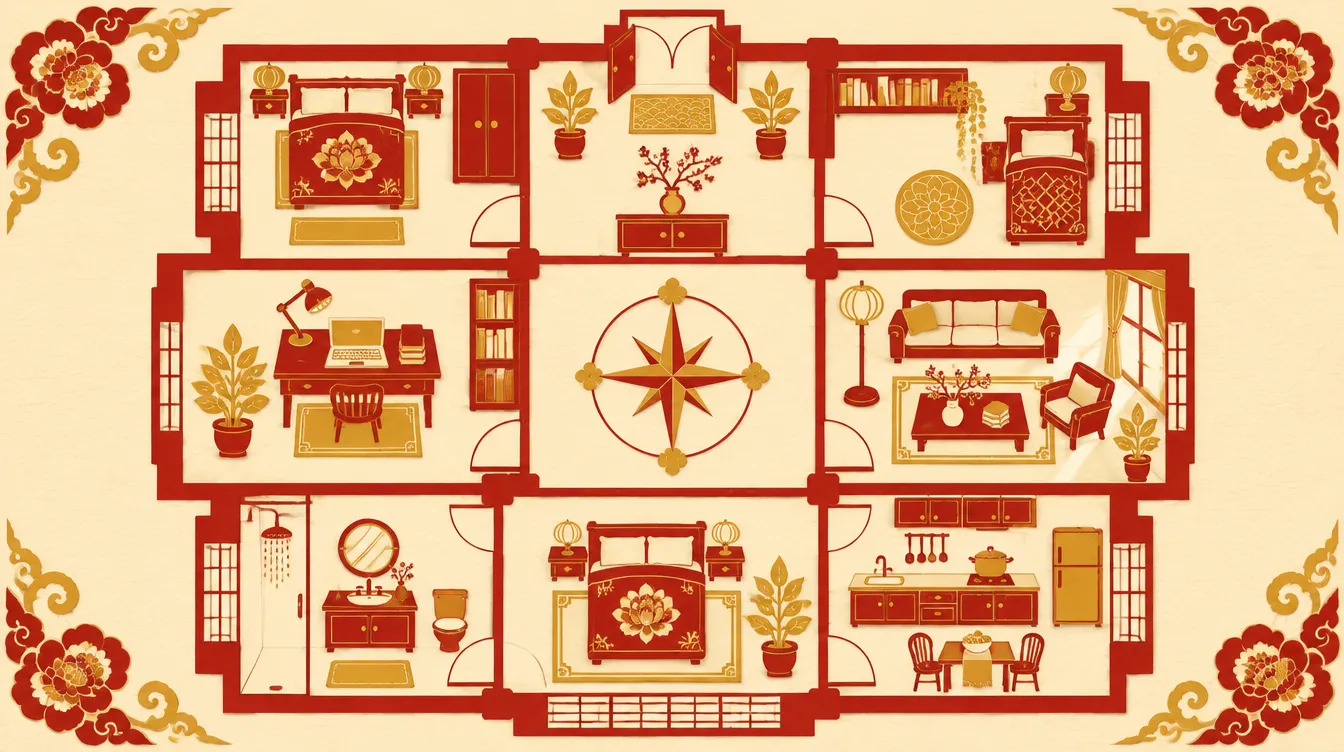 2027 feng shui for your home: a room-by-room checklistA practical 2027 feng shui checklist for the front door, living room, bedroom, kitchen and study, based on the 2027 Flying Stars chart: where Tai Sui, Sui Po and San Sha sit, which sectors to keep quiet, and simple habits for light, clutter and plants. Nothing to buy.
 Your Kua number: how to work it out and find your good directionsHow to work out your Kua number (命卦) from your birth year and gender, including the 立春 year boundary and the rule for births from 2000. East and West groups, your four good directions (生气, 天医, 延年, 伏位), the four less supportive ones, and a table for every Kua number.
 Feng shui for HDB flats and condos: practical tips that cost nothingThe feng shui issues that come up most in HDB flats and condos: doors facing across the corridor, a straight line from door to window, a kitchen or toilet near the entrance, and mirrors. What traditional schools say, simple no-cost responses, and the HDB rules to check before you change anything.
 Bedroom feng shui: where to put the bed, and whyWhere to put your bed by traditional feng shui: the command position, a headboard against a solid wall, beams, mirrors and keeping work out of the bedroom. What each rule is for, how to apply it in a small room, and how the Flying Stars read a bedroom.
 Desk and home office feng shui: the command position and moreHow to place a desk by traditional feng shui: the command position, a solid wall behind you, the dragon and tiger sides, light and clutter. Where the 文昌 study star sits in 2027, month by month, and how to set up a calm video-call background.
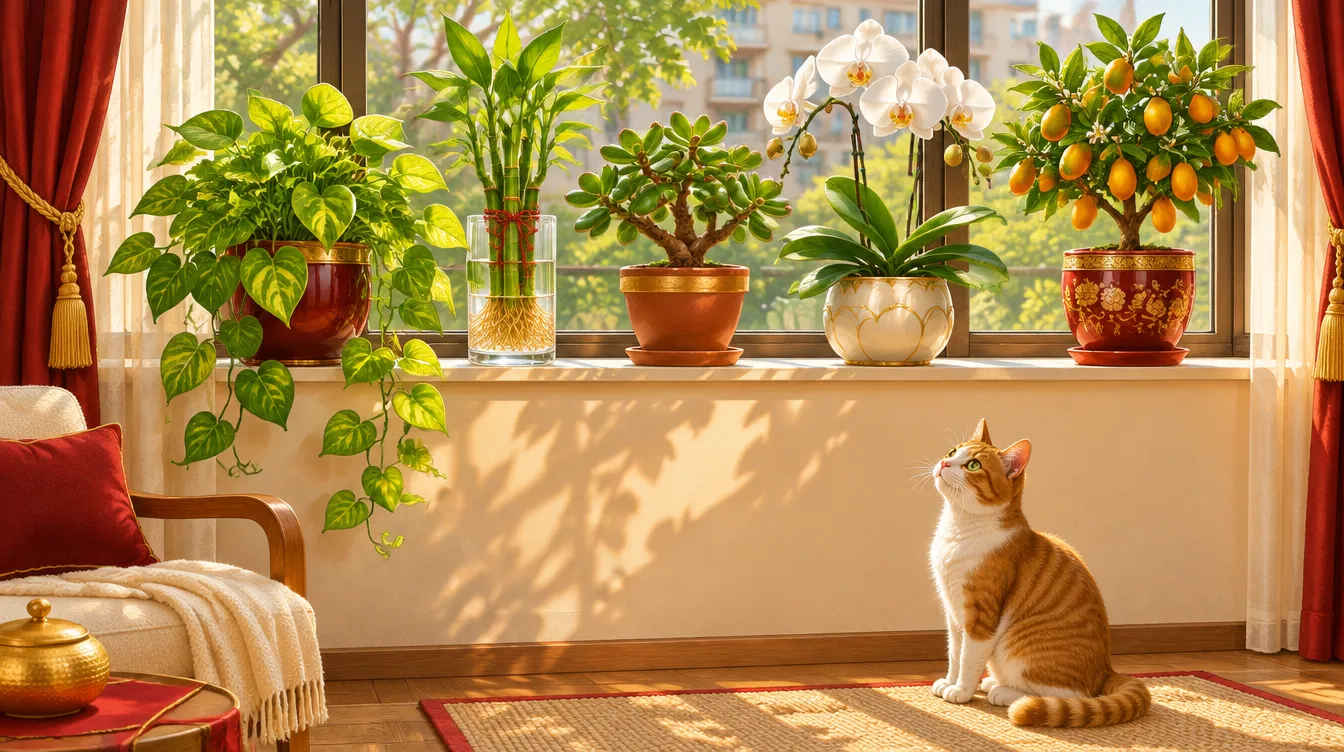 Plants in Chinese tradition: money plants, bamboo and what they symboliseWhat the money plant (黄金葛), lucky bamboo (富贵竹), jade plant, money tree, orchids, kumquats and pussy willow mean in Chinese homes, how to keep them healthy in a tropical flat, which are safe around cats and dogs, and how to stop them breeding mosquitoes.
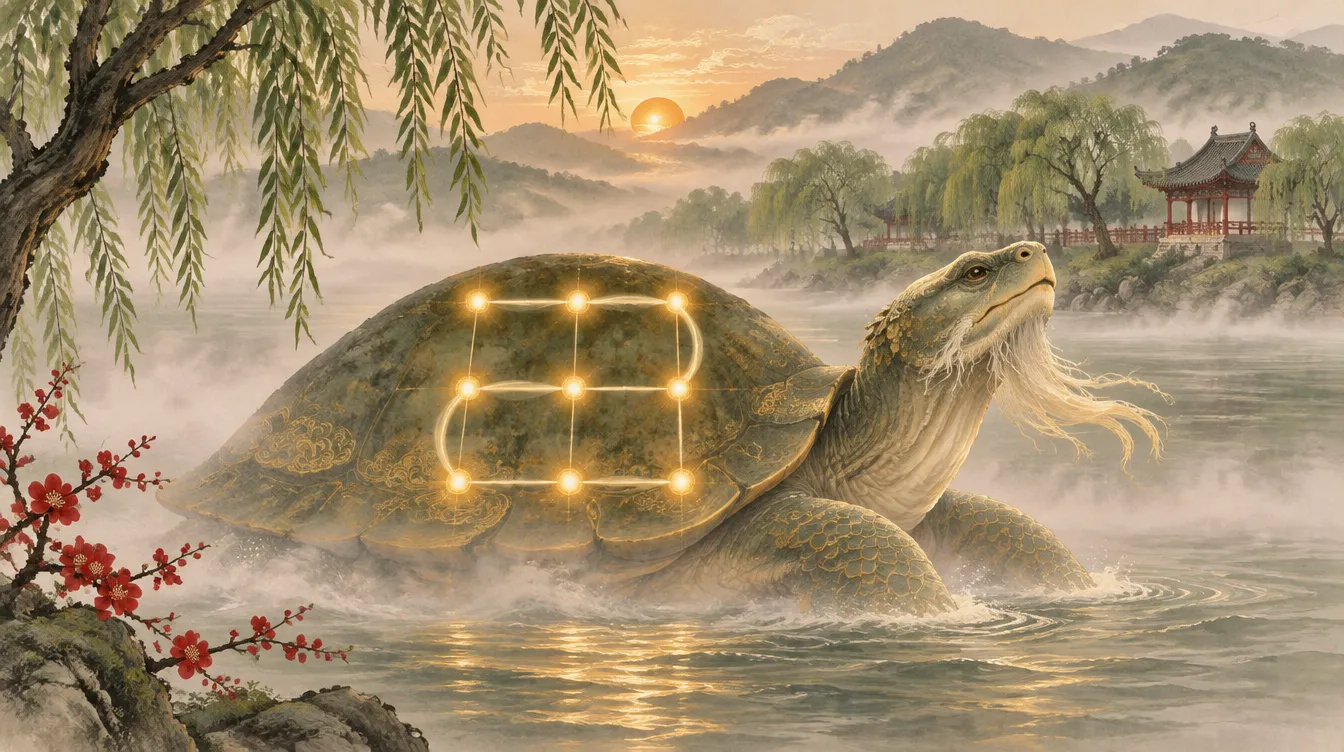 The Luo Shu square: how a Flying Stars chart is builtThe Luo Shu (洛书) magic square, where every line adds up to 15, the fixed flight path the stars follow, and a step-by-step build of the 2027 annual chart with 9 in the centre. Plus the nine stars’ traditional names and how the year, month and house charts fit together.
 Period 9 (九运, 2024–2043): what the new feng shui era meansThe Three Cycles and Nine Periods (三元九运) explained: why each period lasts 20 years, when Period 9 began and ends, what the 离 Fire trigram stands for, what changes for homes in Xuan Kong Flying Stars, and a calm look at the popular claims about Period 9.
Chinese New Year
 Chinese New Year 2027: the date, the Fire Goat and what 丁未 meansChinese New Year 2027 falls on Saturday 6 February, with the reunion dinner on Friday 5 February. What the 丁未 Fire Goat year means, where it sits in the 60-year cycle, why BaZi starts the year on 4 February, and how to prepare.
 Chinese New Year 2027 traditions: what to do on each of the 15 daysA day-by-day guide to Chinese New Year 2027, from the reunion dinner on Friday 5 February to Chap Goh Mei on Saturday 20 February, with the date of each day and how Singapore and Malaysia customs differ, from lo hei on 人日 to the Hokkien Jade Emperor’s birthday.
 Chinese New Year dos and don’ts: the taboos explainedWhy families avoid sweeping on the first day, breaking bowls, lending money or cutting hair at Chinese New Year, what each custom is said to mean, and which ones you will meet most in Singapore and Malaysia.
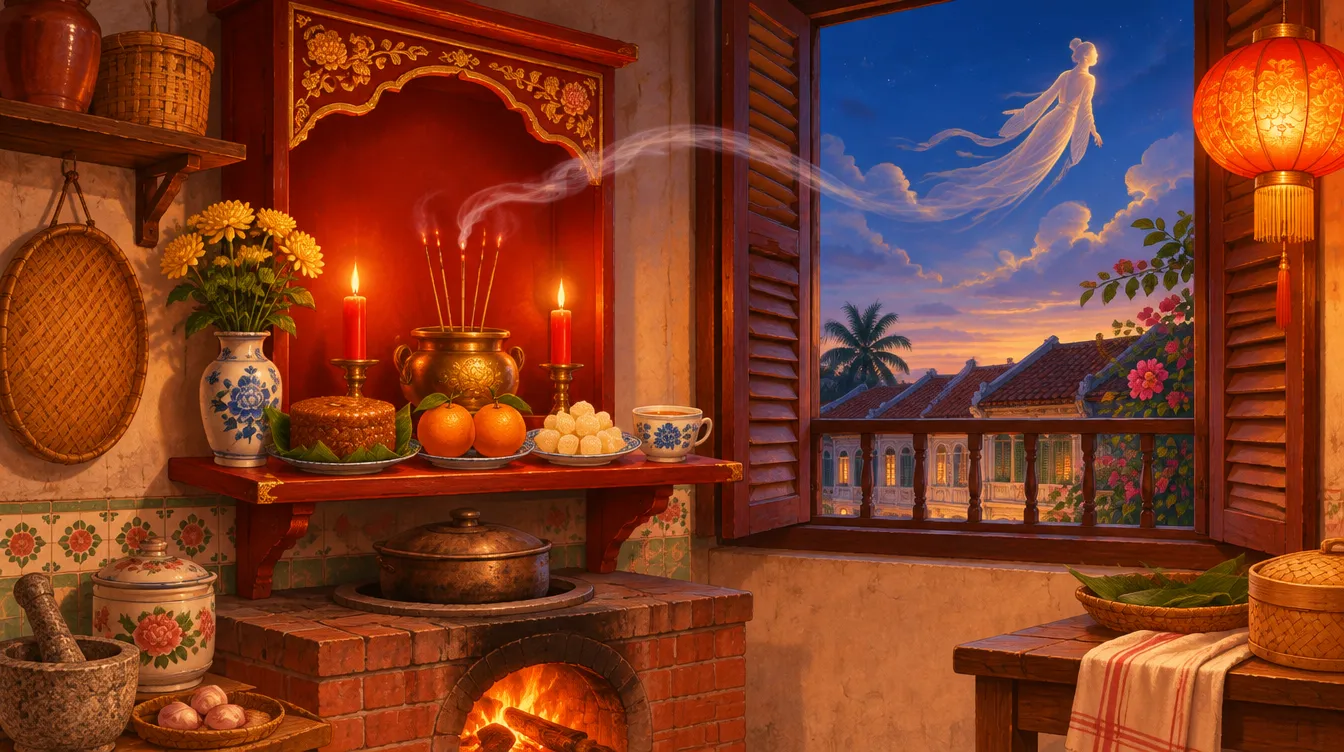 Kitchen God Day 2027 (送灶): when it is and what families doKitchen God Day 2027 falls on Sunday 31 January for most families in Singapore and Malaysia (the 24th of the twelfth lunar month) and Saturday 30 January in northern China. The legend, the sweet offerings, and the welcome back on Tuesday 9 February.
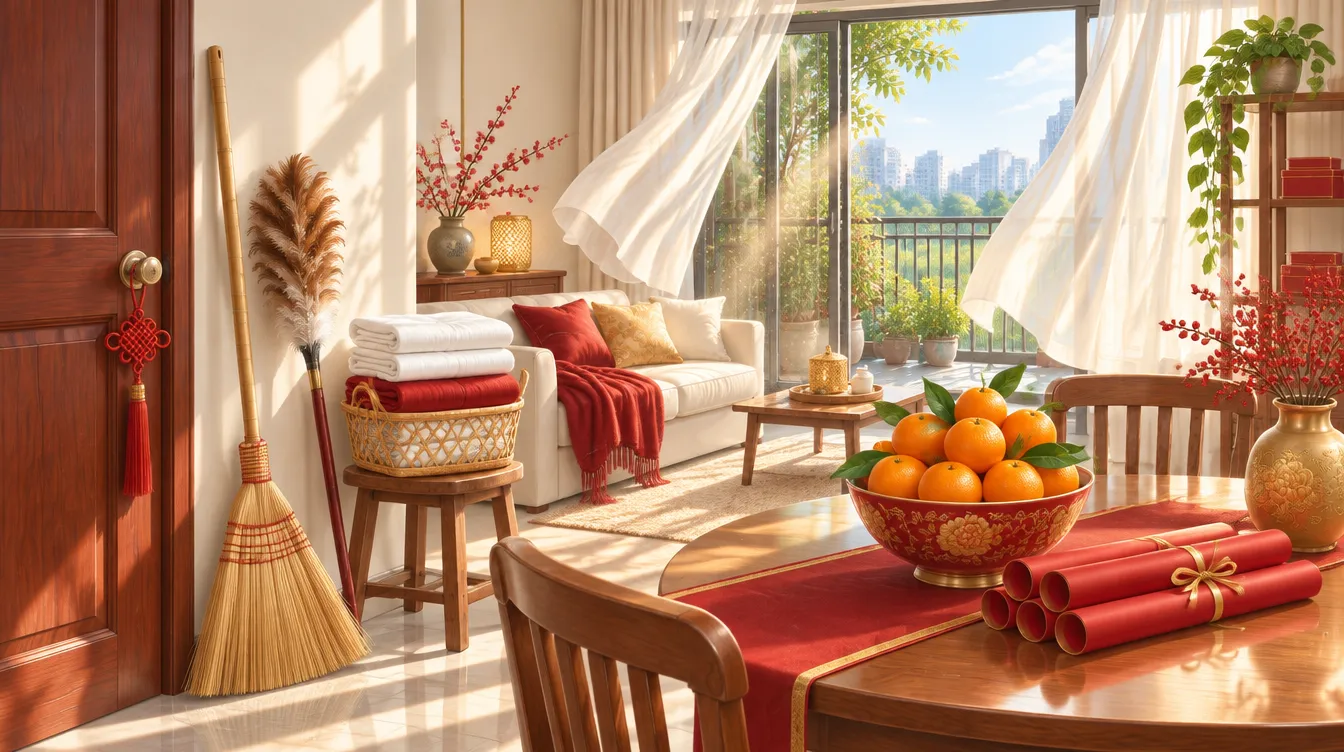 Spring cleaning before Chinese New Year: when to do it and whyThe 扫尘 custom explained: why families clean before Chinese New Year, the traditional days in 2027 (from Sunday 31 January to the eve on Friday 5 February), why the broom rests on day 1, and a room-by-room checklist with the old repair and decluttering customs.
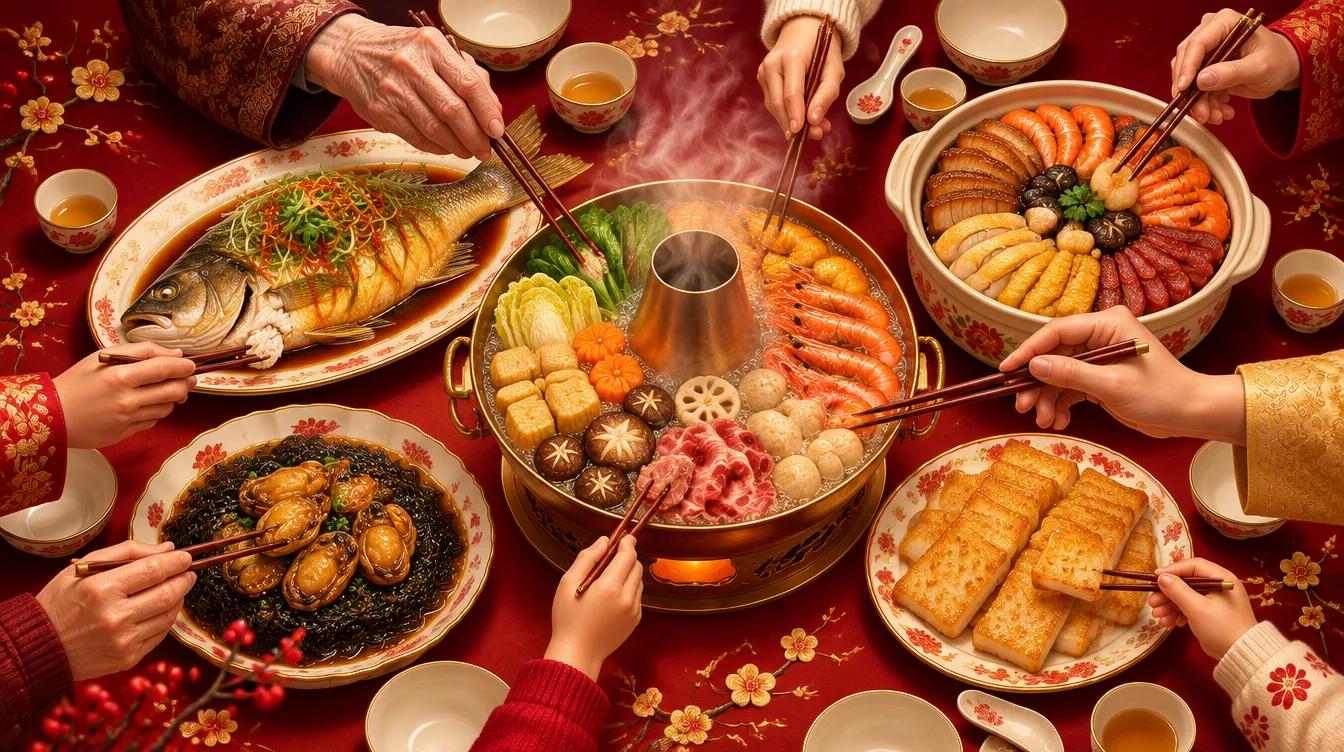 Reunion dinner (团圆饭): the lucky dishes and what each one meansThe reunion dinner for Chinese New Year 2027 is on Friday 5 February. What each lucky dish means, from fish (鱼, surplus) and black moss (发菜, prosperity) to nian gao, poon choi and long-life greens, plus Singapore and Malaysia favourites and table manners for the eve.
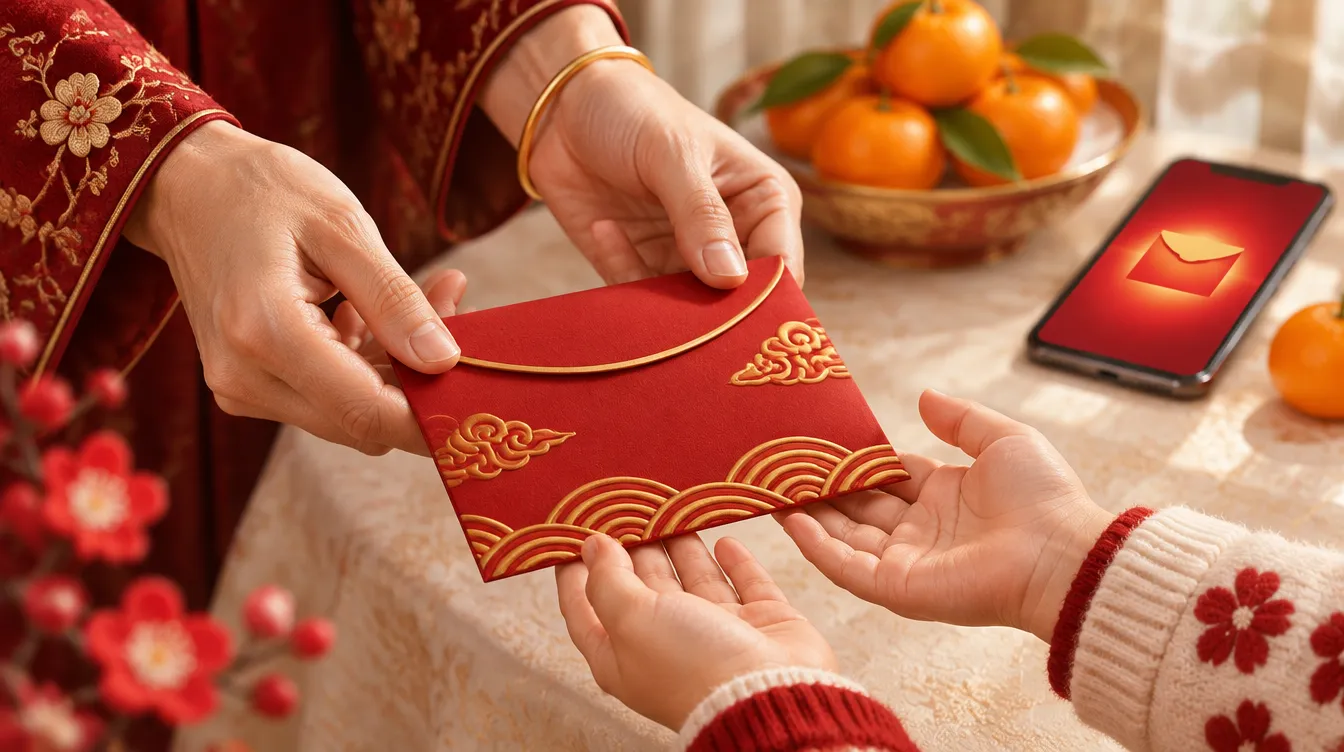 Red packet (ang pow) etiquette for 2027: who gives, how much, and howRed packet etiquette for Chinese New Year 2027 in Singapore and Malaysia: who gives to whom, how to choose an amount without an official rate, lucky and unlucky numbers, new notes versus fit notes, e-ang pows through PayNow and DuitNow, and how to give and receive politely.
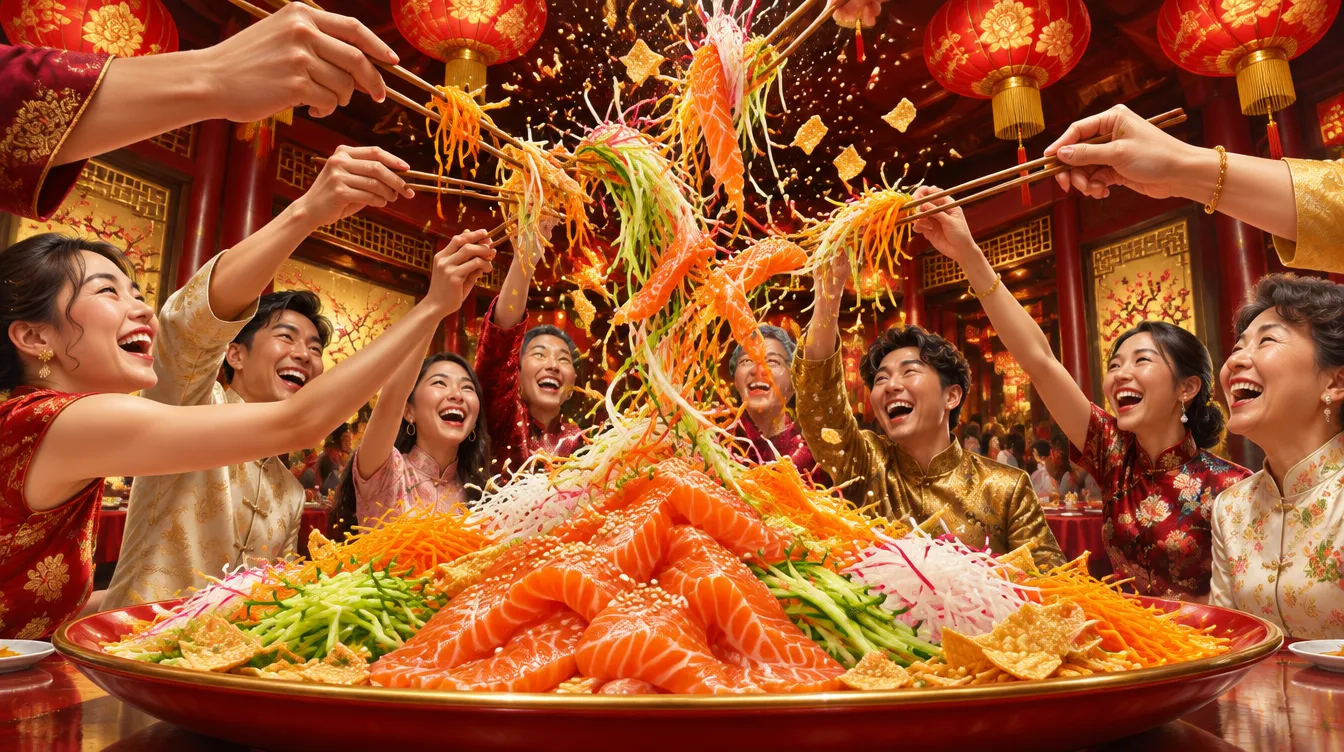 Lo hei (捞鱼生): the yusheng toss, step by step, with the lucky phrasesHow to lo hei: each yusheng ingredient in order with its Chinese phrase, pinyin and meaning, the Singapore and Malaysia origin stories, the traditional day (人日, Friday 12 February 2027) and how to toss politely at home, at a restaurant or at work.
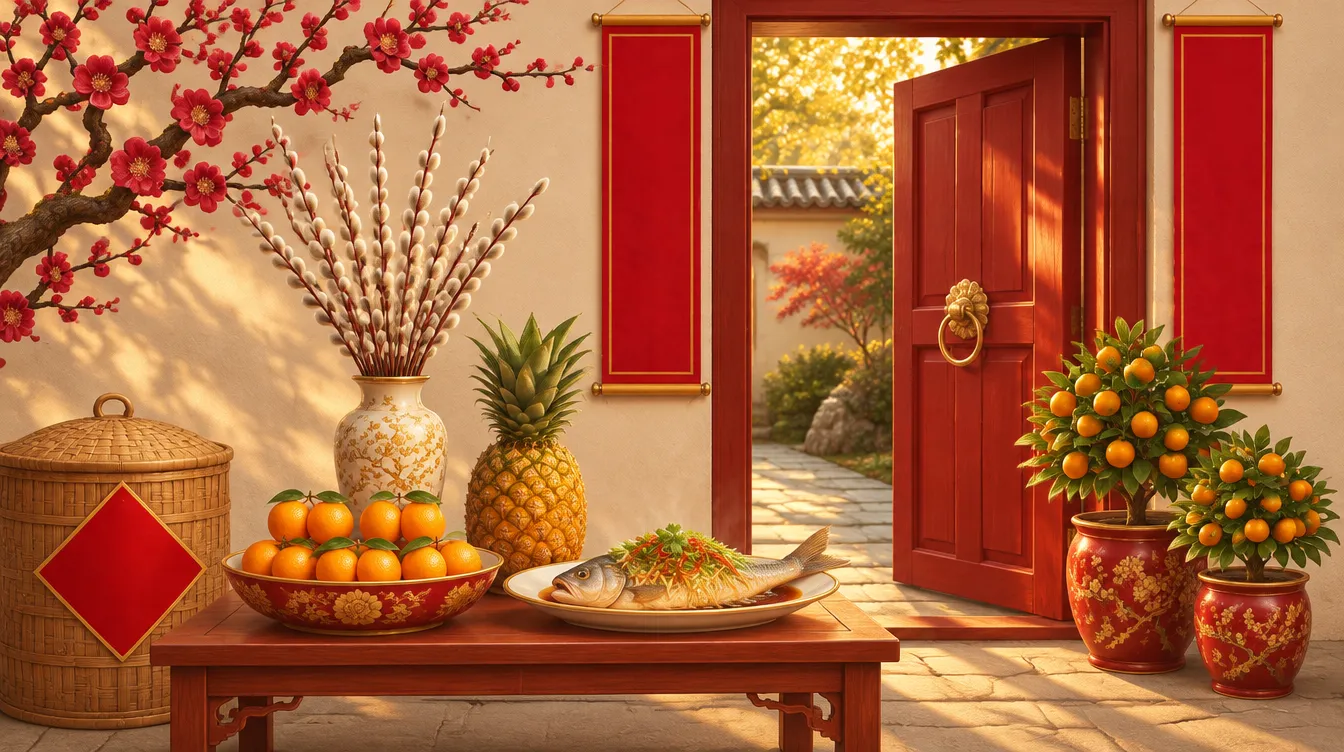 Mandarin oranges, pineapples and other New Year symbols explainedWhy Chinese families give mandarin oranges in pairs, hang pineapples, turn 福 upside down, leave fish on the plate and fill vases with pussy willow. The wordplay behind each New Year symbol, which dialect it works in, and how Singapore and Malaysia homes use them.
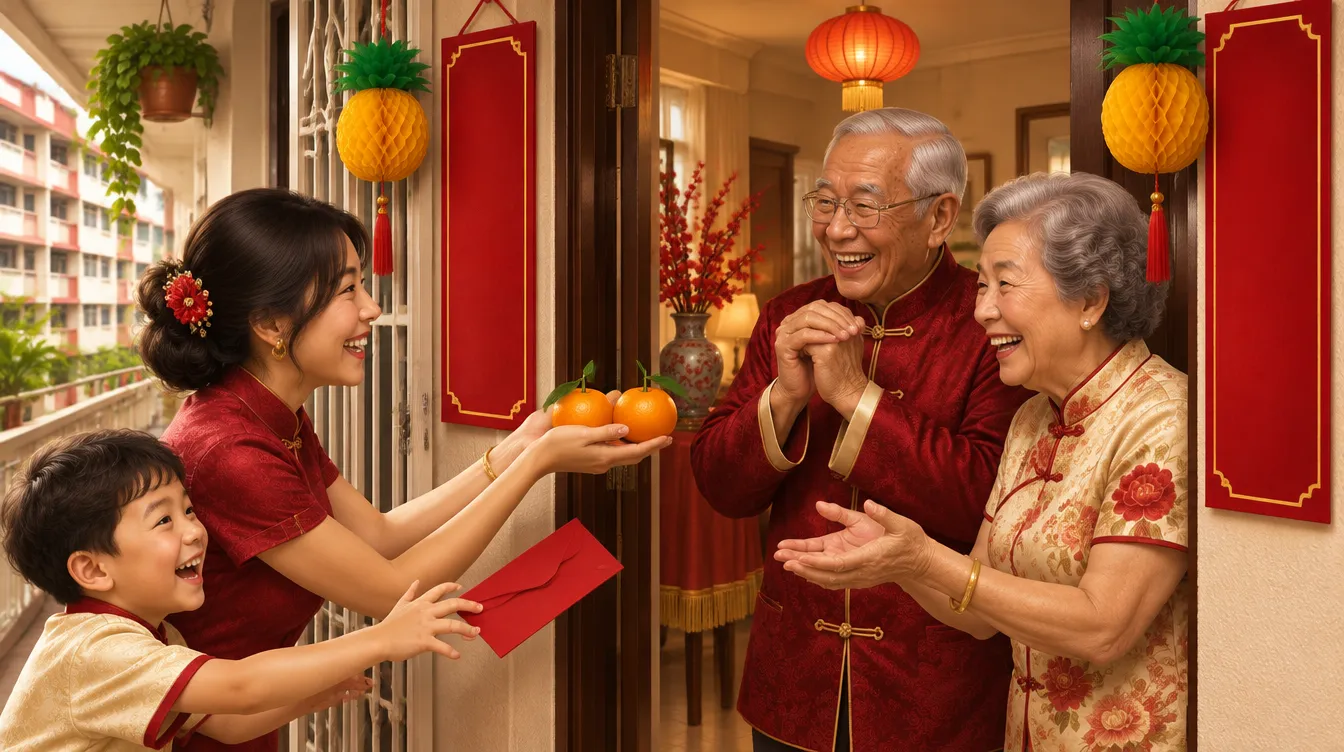 Chinese New Year greetings in Mandarin, Cantonese and HokkienThe Chinese New Year greetings people actually use in Singapore and Malaysia, in Mandarin, Cantonese and Hokkien, with what each means and who to say it to. Plus greetings for the 2027 Goat year, how to reply, and a few phrases to avoid.
Festivals and customs
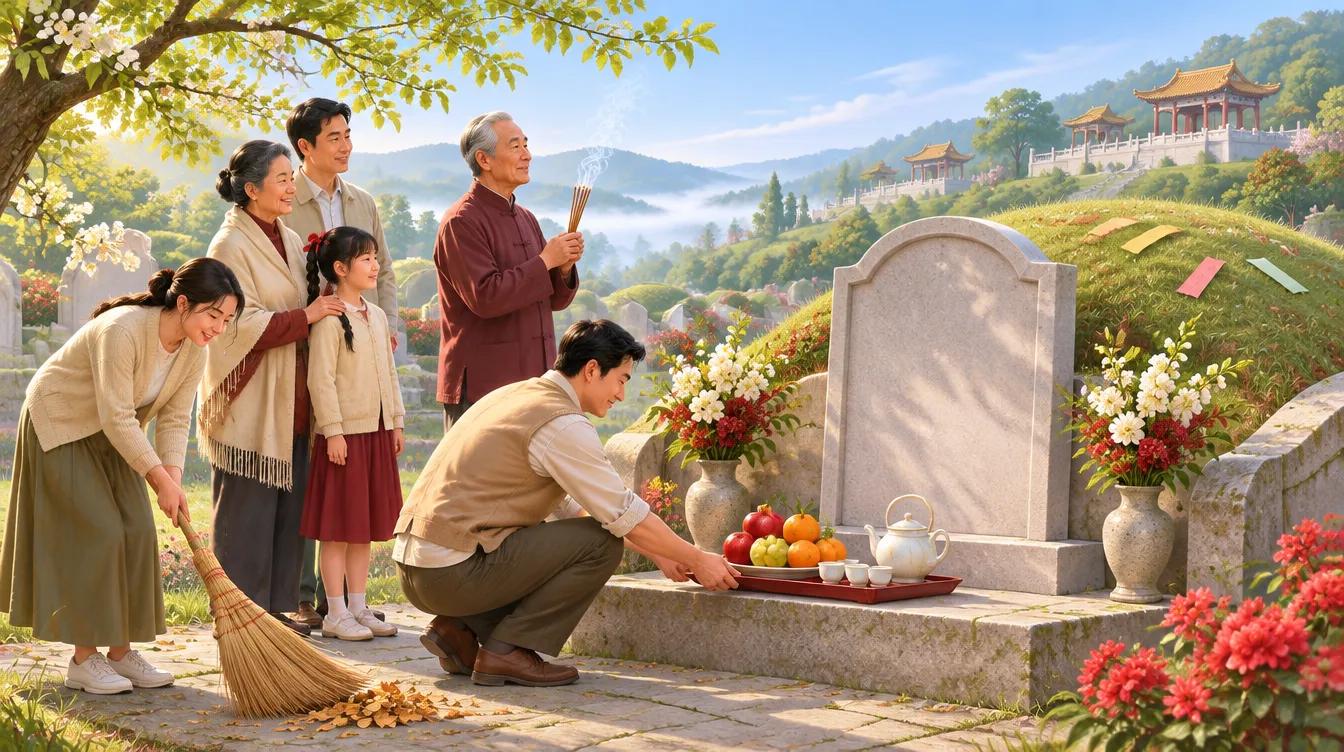 Qingming Festival 2027 (清明): the date, and how families honour their ancestorsQingming 2027 falls on Monday 5 April. What the 清明 solar term means, where the 寒食 cold-food day comes from, how families in Singapore and Malaysia visit graves and columbaria, and a 2027 table of weekend dates with what the almanac says about each.
 Dragon Boat Festival 2027 (端午): the date, zongzi and old customsThe Dragon Boat Festival 2027 falls on Wednesday 9 June. The Qu Yuan story, how Hokkien, Nyonya and Cantonese zongzi differ, old customs from mugwort to balancing an egg at noon, and where dragon boats race in Singapore and Malaysia.
 Hungry Ghost Month 2027 (中元): the dates and customs, calmly explainedHungry Ghost Month 2027 runs from Monday 2 August to Tuesday 31 August, with 中元 on Monday 16 August. Its Buddhist and Taoist origins, getai and charity auctions in Singapore and Malaysia, and the common customs, explained calmly as customs.
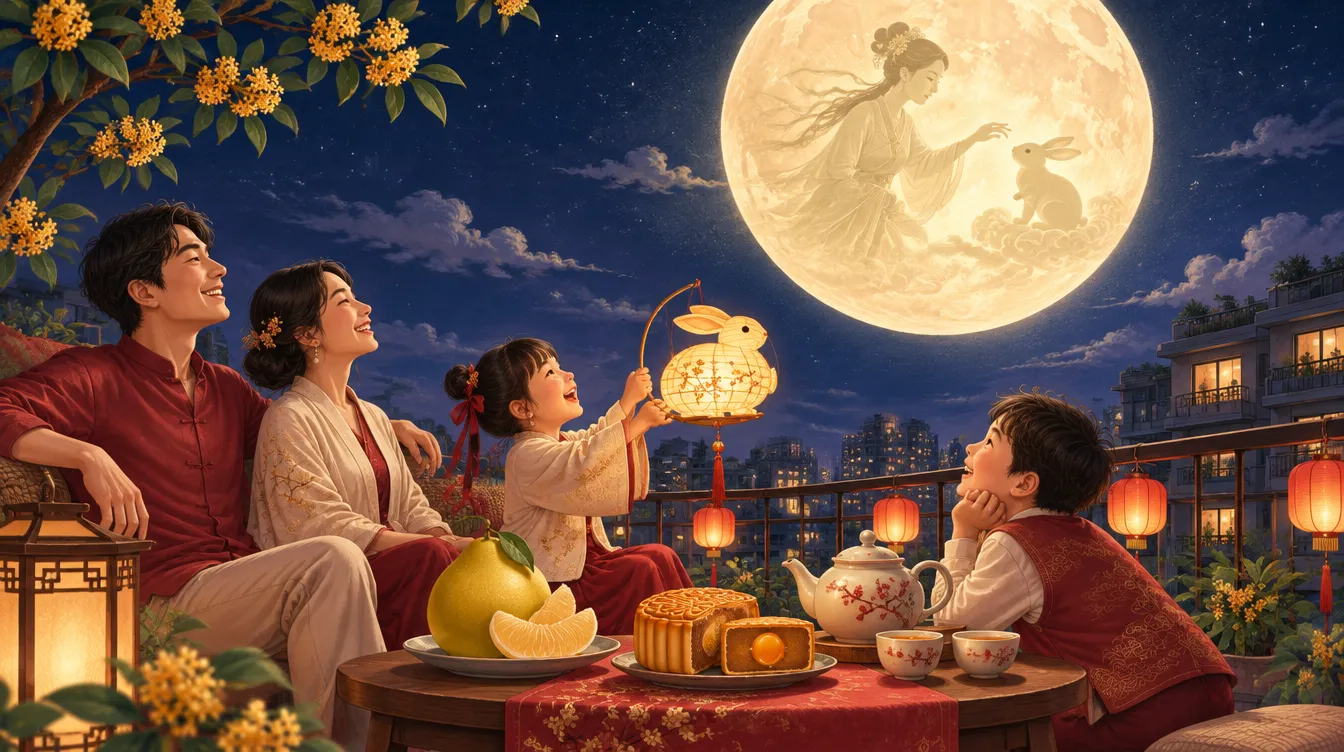 Mid-Autumn Festival 2027 (中秋): the date, mooncakes and lanternsMid-Autumn Festival 2027 falls on Wednesday 15 September. The Chang’e story, how baked, snowskin and Teochew mooncakes differ, lantern customs in Singapore and Malaysia, and how lantern riddles work.
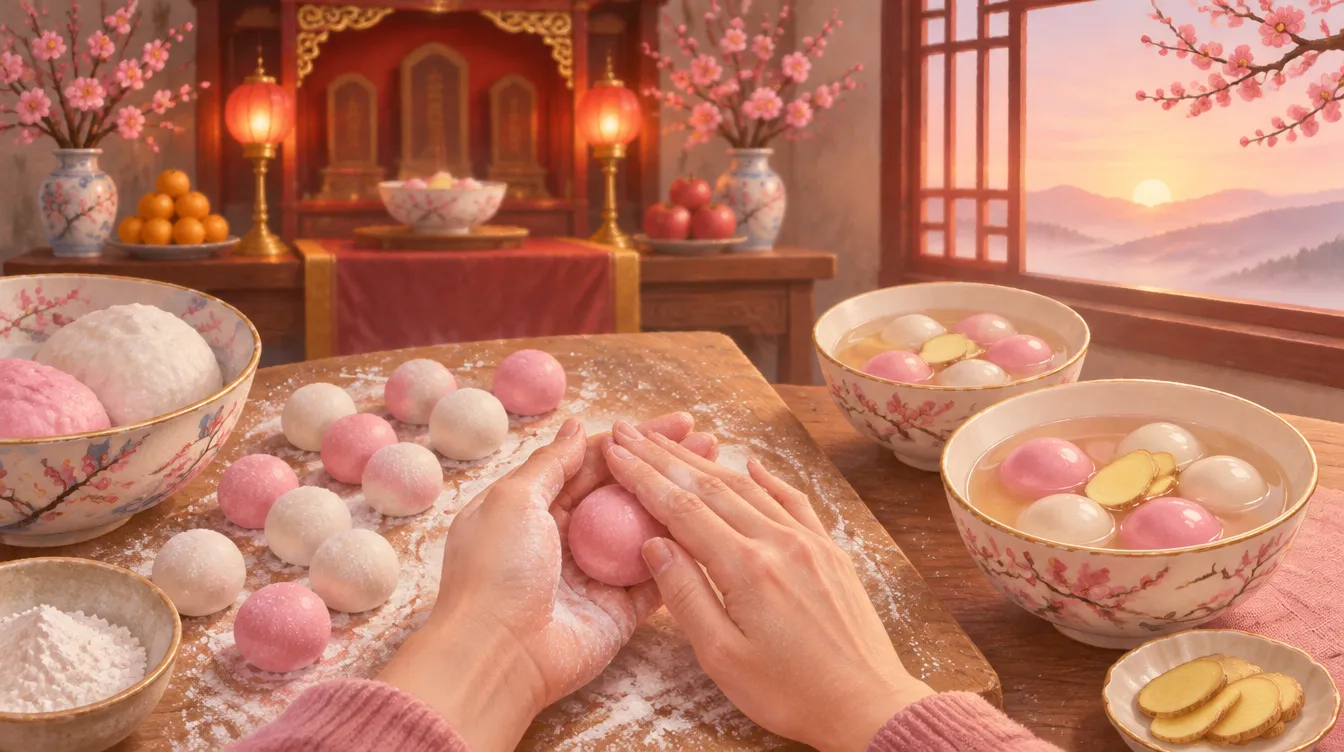 Winter Solstice 2027 (冬至): tangyuan and why it is called the little new yearWinter Solstice 2027 (冬至) falls on Wednesday 22 December at 10:42, the same clock time in Beijing, Singapore and Kuala Lumpur. Tangyuan customs in Singapore and Malaysia, why it is called the little new year, and what the 子 month means in BaZi.
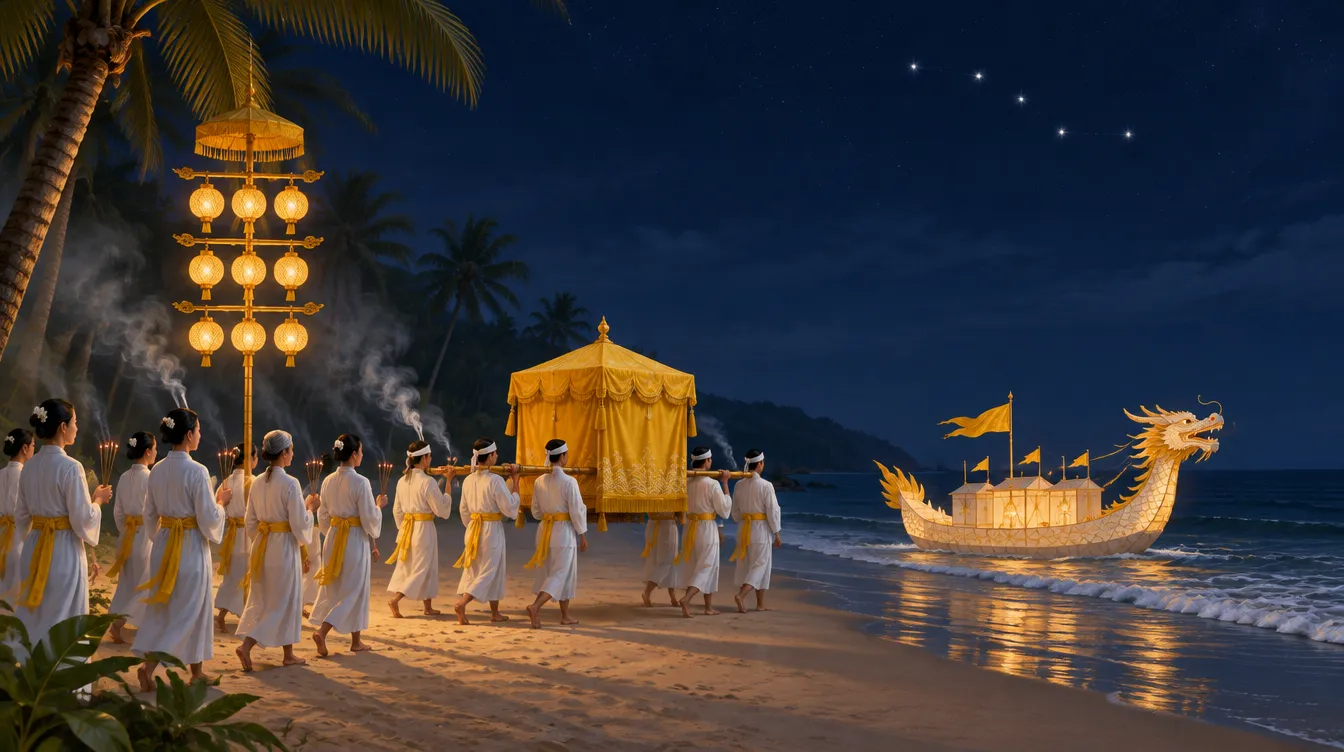 Nine Emperor Gods Festival 2027 (九皇爷): dates and customs in Malaysia and SingaporeThe Nine Emperor Gods Festival 2027 runs from 30 September to 8 October, with the gods received on the evening of 29 September. Day-by-day dates, who the Nine Emperors are, the vegetarian rules, white and yellow clothing, the processions, and tips for respectful visitors.
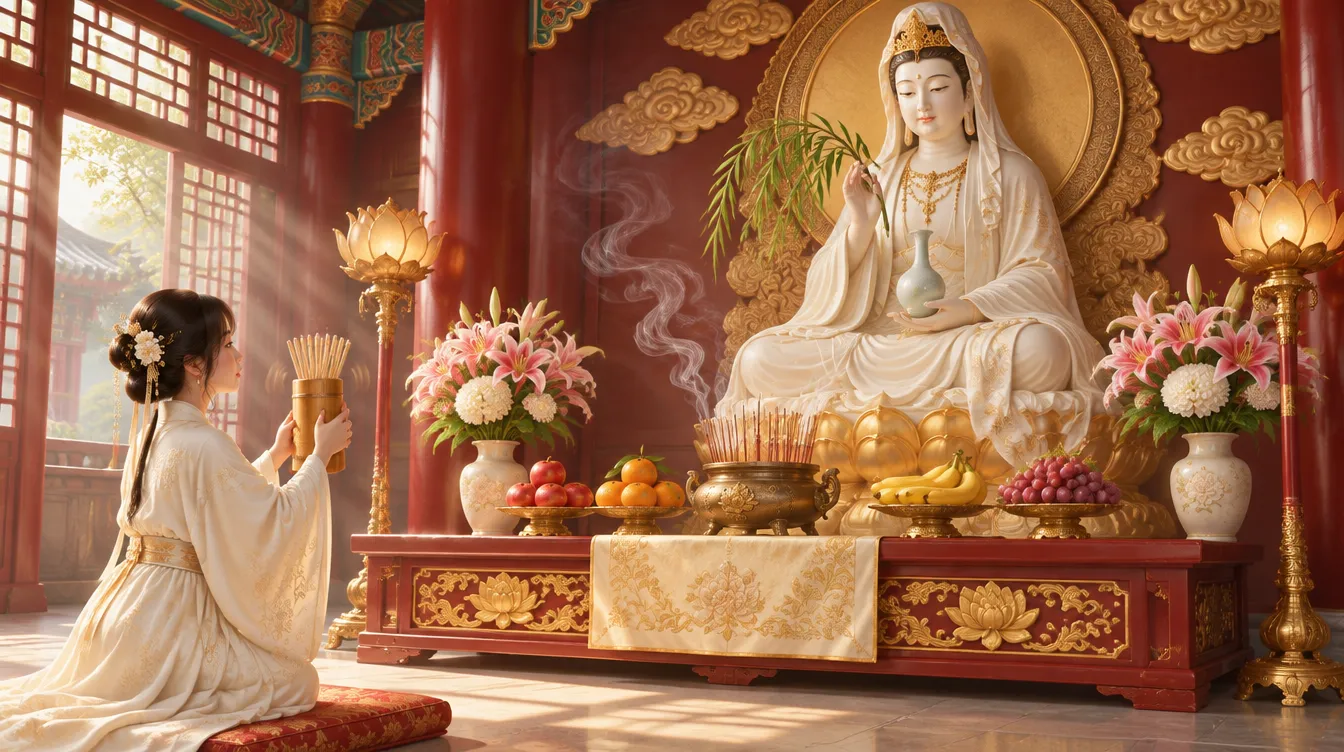 Guanyin’s three feast days in 2027 (观音诞): dates and customsGuanyin’s feast days in 2027 fall on 26 March, 22 July and 18 October, the 19th of the 2nd, 6th and 9th lunar months. What tradition says each day marks, the Miaoshan story behind them, vegetarian customs, temple visits in Singapore and Malaysia, and how Guanyin fortune sticks fit in.
 Wishing lanterns in Chinese tradition, and how to light one onlineWhere Kongming sky lanterns and river lanterns come from, which festivals they belong to, why releasing sky lanterns is not allowed in Singapore, and how our free online wish lantern wall works.
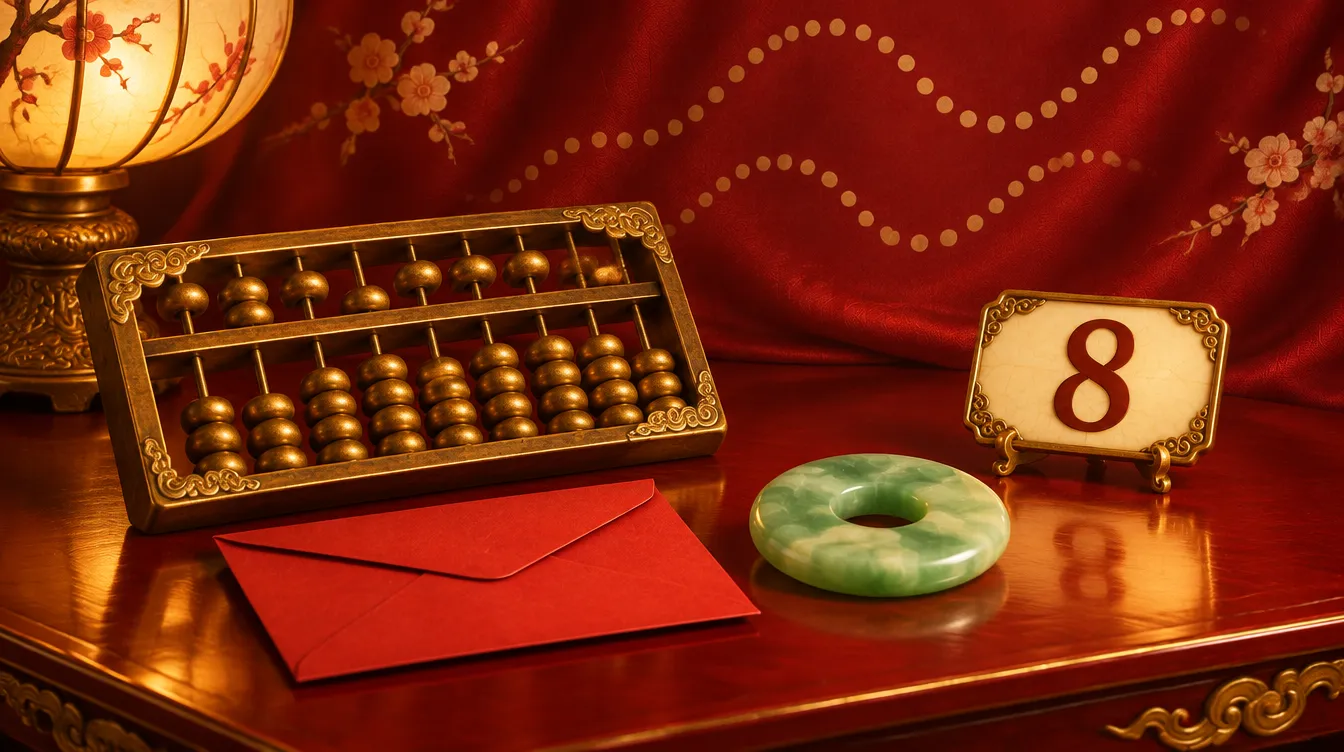 Lucky and unlucky numbers in Chinese culture: 8, 4 and the restWhat every digit from 0 to 9 sounds like in Mandarin and Cantonese, why 8 is loved and 4 avoided, combinations such as 168, 518, 520, 14 and 24, where people in Singapore and Malaysia use them, and how the 河图 links numbers to the five elements.
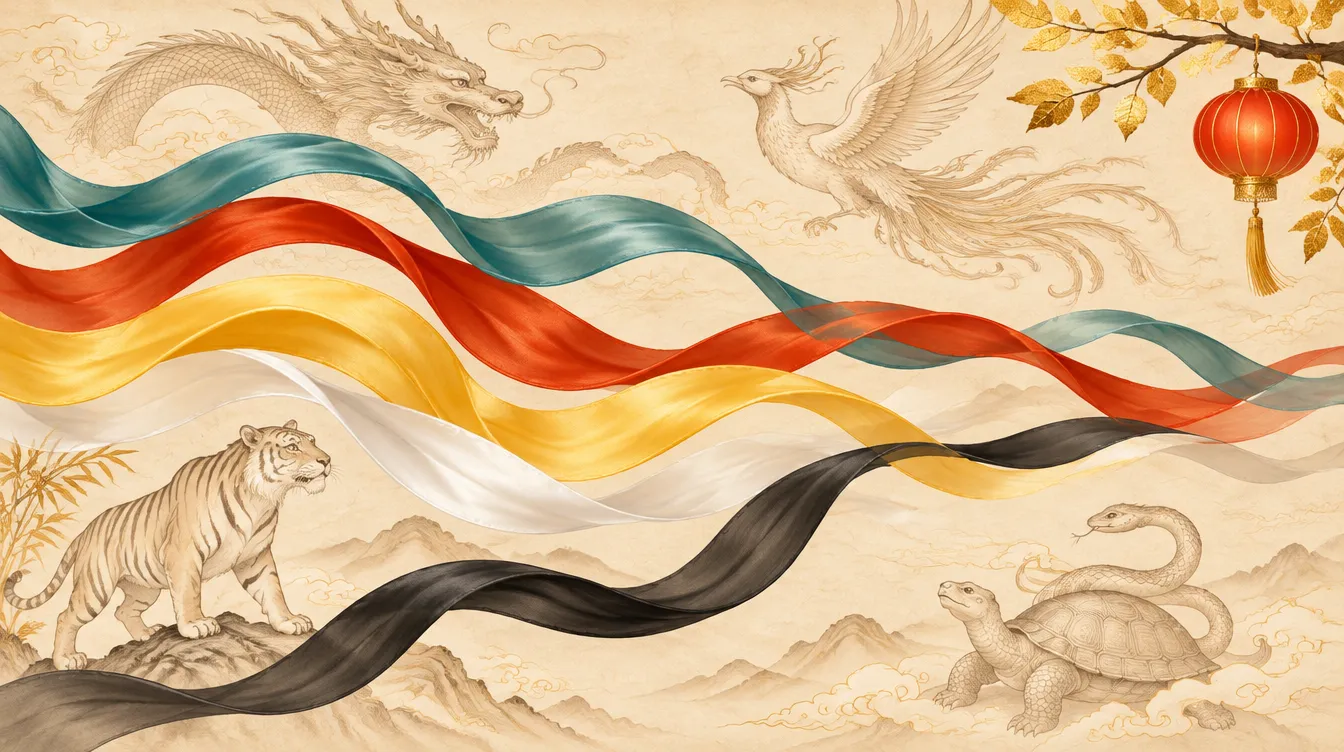 Colours in Chinese culture: red, gold, white and what they meanThe five classical colours and the four guardian animals, why red and gold fill celebrations, white and black at funerals (with Singapore customs), imperial yellow, the green hat idiom, and a quick guide to colours at weddings, funerals and New Year.
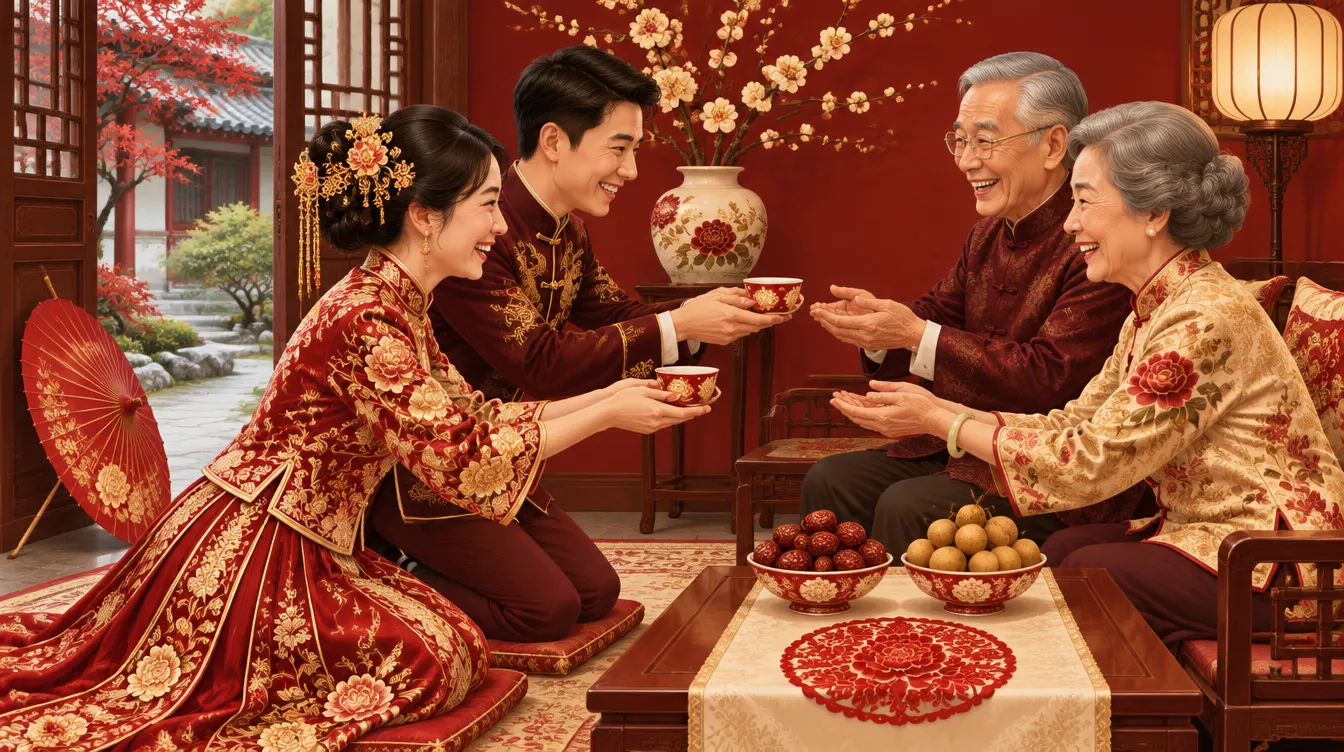 Chinese wedding customs: guo da li, the tea ceremony and the door gamesThe traditional Chinese wedding customs still kept in Singapore and Malaysia, in order: guo da li betrothal gifts by dialect group, setting the bridal bed, the hair-combing ceremony, the door games, the tea ceremony and who is served first, and the return visit.
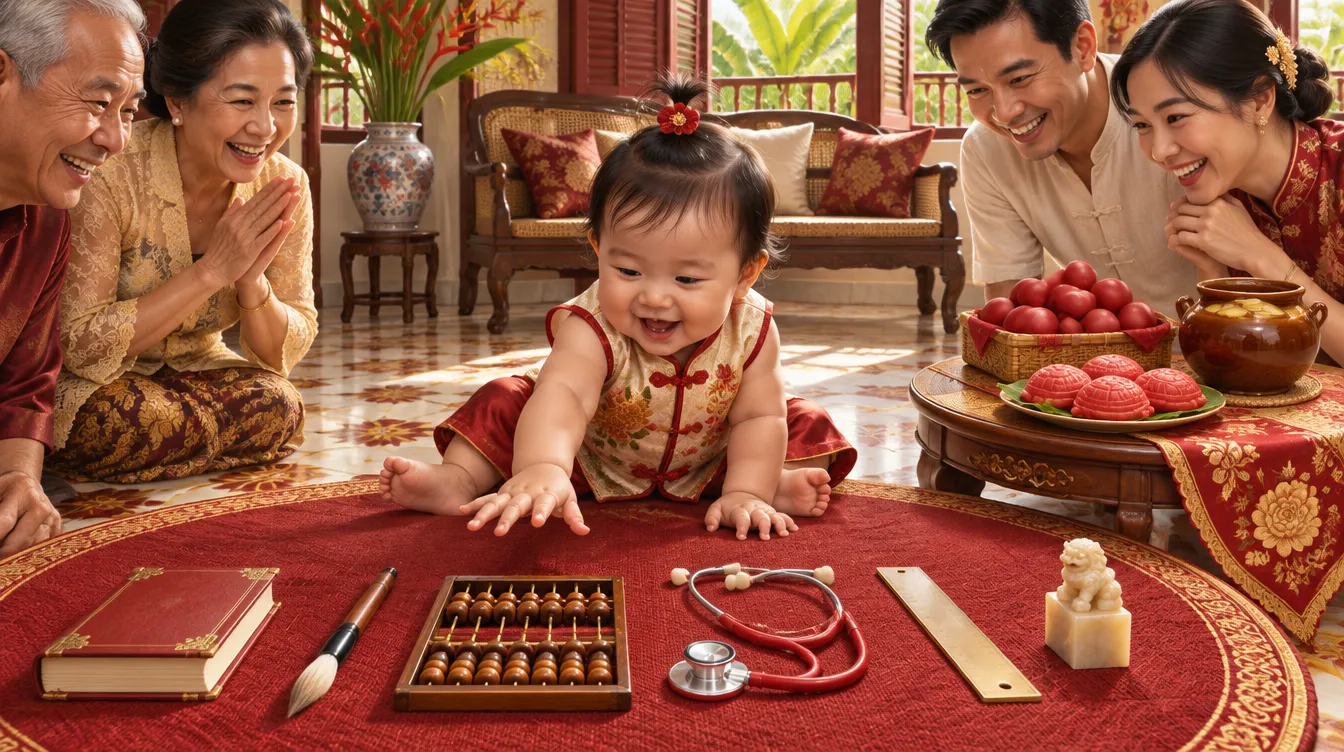 Full month (满月) and first birthday (抓周) customs explainedChinese full-month (满月) customs in Singapore and Malaysia: confinement, red eggs, ang ku kueh, Cantonese ginger vinegar and Peranakan nasi kunyit, when to hold the party, the 抓周 first-birthday grab and its objects, and a guest etiquette checklist.
The Chinese calendar
 How to read the Chinese almanac (黄历): daily 宜 and 忌 explainedWhat the Chinese almanac (通胜, 黄历) is and how to read a daily entry: the day pillar, the twelve day officers (建除十二值), 黄道 and 黑道 days, 宜 and 忌, the clash animal and 煞 direction, lucky hours and the Joy and Wealth god directions, with a worked example for Lunar New Year 2027.
 The 24 solar terms (二十四节气): the sun’s calendar behind BaZiAll 24 Chinese solar terms for 2027 with their meanings and exact Beijing times, which are 节 (month boundaries) and which are 中气, how the 节 set your BaZi month, what the names mean near the equator, and the 2016 UNESCO listing.
 The Chinese lunar calendar: why the dates move and how leap months workHow the Chinese lunisolar calendar works: months that start at the new moon, 29- and 30-day months, the rule that makes a month with no 中气 a leap month, recent and upcoming leap months to 2044, why Lunar New Year moves between 21 January and 20 February, and how leap-month birthdays are kept.
 Chinese age (虚岁): how to count it and why it differs from your real ageHow to work out your Chinese age (虚岁): one at birth, one more at Lunar New Year, with the families who count from 立春 or 冬至 instead. A three-step method, worked examples for 2027, and where 虚岁 still matters, from 花甲 birthdays to Zi Wei Dou Shu.
Which Day Master are you?
Your free chart finds it from your birth date, time and city, using true solar time.
Find my Day Master freeFor reflection and entertainment.