Learn how it works
Free guides to the tradition behind this service.
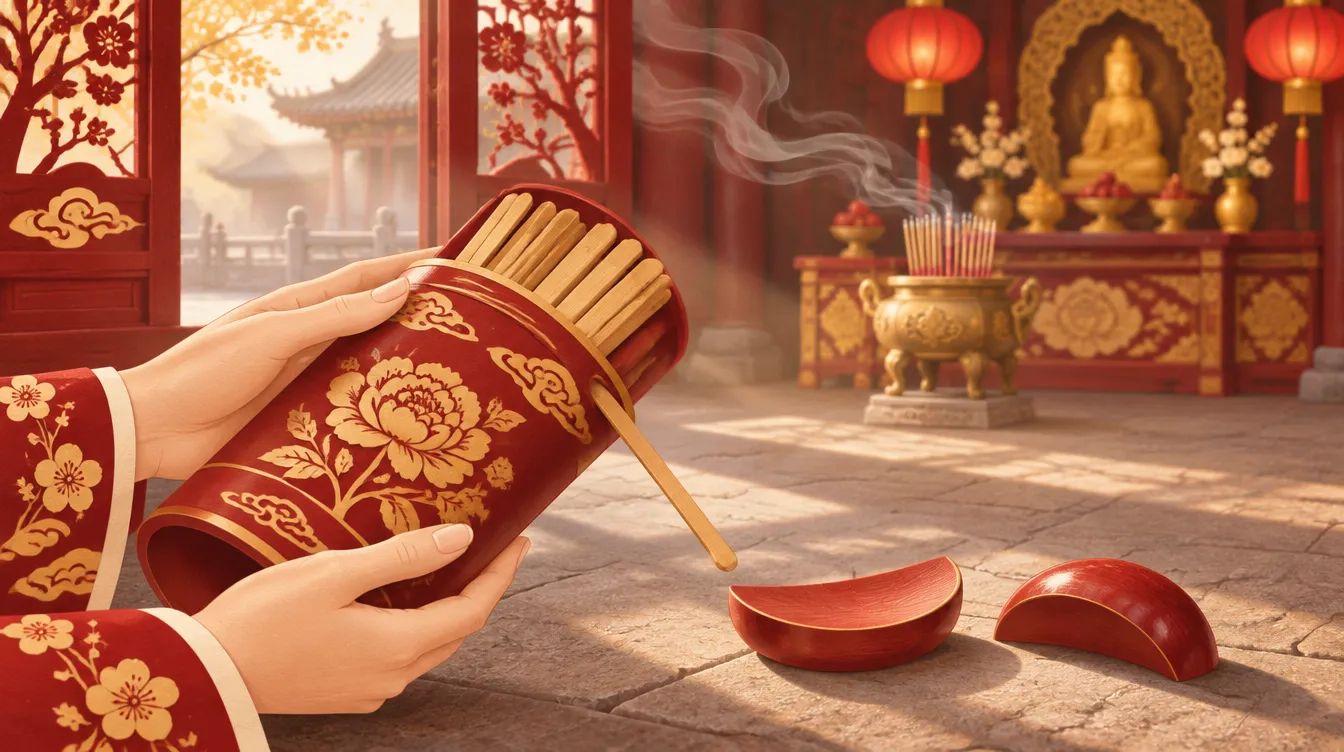 How to do kau cim (求签): a step-by-step guide to Guanyin fortune sticksHow to do kau cim (求签) at a temple or online: preparing your question, shaking the cylinder, confirming the stick with moon blocks (筊杯), getting the slip and its interpretation, and simple etiquette.
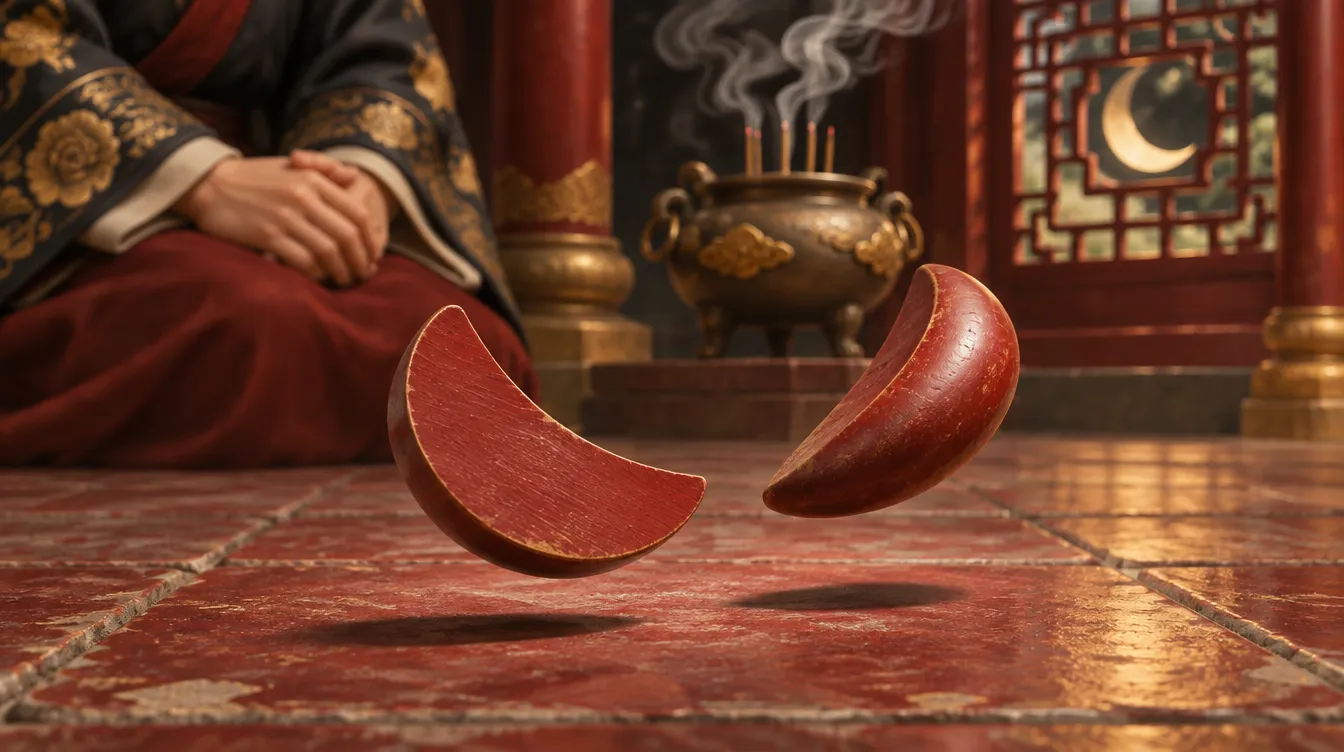 Moon blocks (筊杯) explained: how temples confirm your fortune stickWhat moon blocks (筊杯, jiaobei) are, the three outcomes (圣杯 yes, 笑杯 laughing, 阴杯 no), how many throws temples ask for, their names in Hokkien and Cantonese, and how our online temple uses them.
 Drew a 下 stick? How to read a difficult fortune calmlyWhat a 下 (lower) fortune stick means, why it is advice for a season, how to read its verse for your own question, and what people traditionally do after drawing one. With examples from the 100 Guanyin sticks.
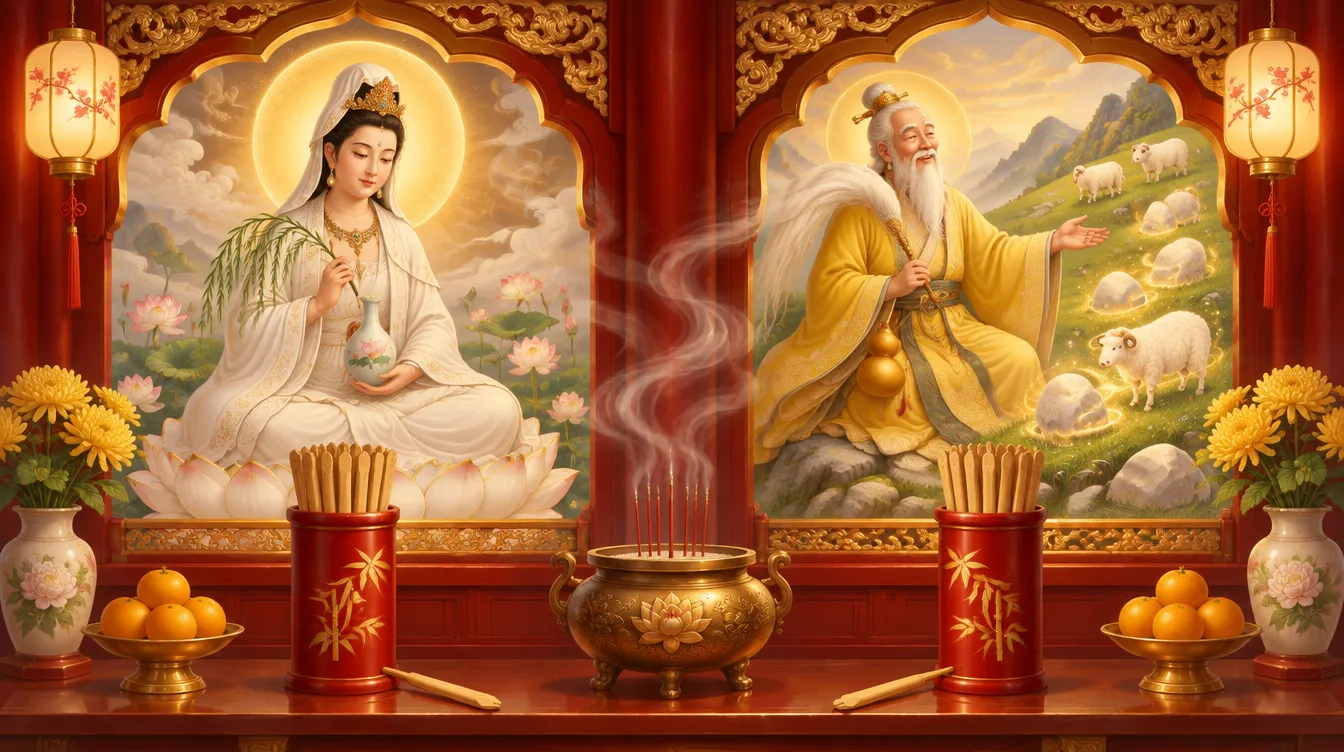 Guanyin sticks and Wong Tai Sin sticks: what’s the difference?Guanyin (观音) and Wong Tai Sin (黄大仙) both answer questions through 100 fortune sticks, but the verses and ranks differ. Who each one is, the Wong Tai Sin Temple in Hong Kong, how the two sets compare, and why a stick number only works with its own set.